

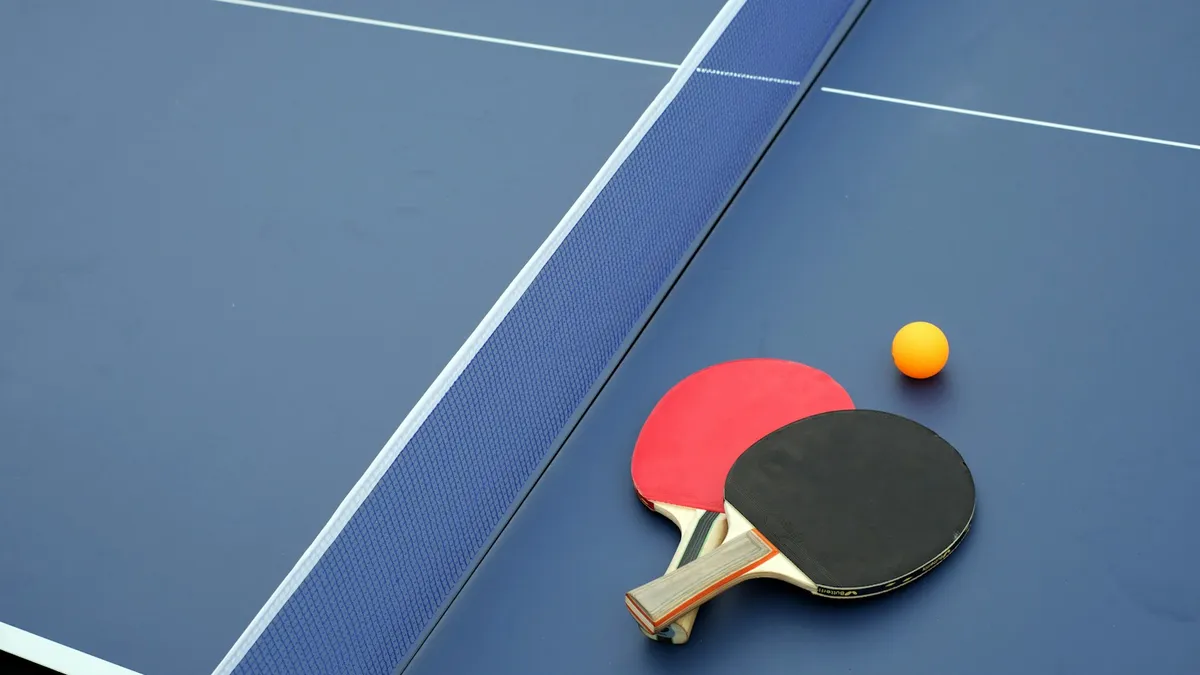
A table tennis table has a playing surface 2.74 m long and 1.525 m wide, 76 cm above the floor. The net stands 15.25 cm above the playing surface. The figures are in chapter 2 of the ITTF Laws.
How big is a table tennis table?
The size of a table tennis table is given in the first Law, "The Table", of the Laws of Table Tennis published by the International Table Tennis Federation (ITTF); the values are taken from the 2025 statutes. The upper surface of the table is called the playing surface. It is rectangular, 2.74 m long and 1.525 m wide, and lies in a horizontal plane 76 cm above the floor. The vertical sides of the tabletop are not part of the playing surface. From these figures the surface area is 2.74 × 1.525 ≈ 4.18 m², and each half divided by the net is 1.37 m long.
| Dimension | Value |
|---|---|
| Playing surface length | 2.74 m |
| Playing surface width | 1.525 m |
| Height above the floor | 76 cm |
| Side and end line width | 2 cm |
| Doubles centre line | 3 mm |
| Net height | 15.25 cm above the playing surface |
| Net post | 15.25 cm high, 15.25 cm outside the side line |
| Ball diameter and weight | 40 mm, 2.7 g |
Properties of the playing surface
Under the Laws the playing surface may be of any material, but it must give a uniform bounce of about 23 cm when a standard ball is dropped onto it from a height of 30 cm. The surface must be uniformly dark coloured and matt, with a white side line 2 cm wide along each 2.74 m edge and a white end line 2 cm wide along each 1.525 m edge. For doubles each court is divided into two equal half-courts by a white centre line 3 mm wide; the centre line is regarded as part of each right half-court. The surface is divided into two equal courts by the net and must be continuous over the whole area of each court.
Net and posts
The net is suspended by a cord attached at each end to an upright post. The post is 15.25 cm high and its outside limit is 15.25 cm outside the side line. The top of the net, along its whole length, is 15.25 cm above the playing surface; the bottom is as close as possible to the surface, and the ends of the net are attached to the posts from top to bottom. The net runs parallel with the end lines and divides the table into two equal courts.
Ball and racket sizes
Besides the table, the Laws define the ball and the racket. The ball is spherical, 40 mm in diameter and 2.7 g in weight; it is made of plastic, white or orange, and matt. The racket may be of any size, shape or weight, but the blade must be flat and rigid. At least 85% of the blade by thickness is natural wood. The covering on the striking side, including adhesive, must be less than 2.05 mm thick for ordinary pimpled rubber with the pimples outwards, and less than 4.05 mm for sandwich rubber. One side must be black and the other a bright colour clearly distinguishable from black and from the colour of the ball.
The space and floor around the table
The Laws do not define the free space around the table or the floor covering of the hall; they only require the playing surface to be 76 cm above the floor. For hall floors see indoor sports hall flooring, and for other indoor court sizes see badminton court dimensions and futsal court dimensions. To plan several sports together in school and residential common areas see our sports courts in residential complexes guide, and for surface options our sports flooring types page.
Frequently Asked Questions
How big is a table tennis table?
Under the ITTF Laws the playing surface is 2.74 m long and 1.525 m wide and lies 76 cm above the floor.
How high is a table tennis net?
The net is 15.25 cm above the playing surface along its whole length; the posts are 15.25 cm high and 15.25 cm outside the side line.
What is the diameter of a table tennis ball?
The ball is 40 mm in diameter and weighs 2.7 g; it is plastic, white or orange, and matt.
How wide are the lines on a table tennis table?
The side and end lines are white and 2 cm wide. The centre line used in doubles is 3 mm wide.
Would you like a site survey for your floor? HBK Epoxy Flooring, based in Gaziantep, offers free surveys and quotations in the surrounding provinces.
0507 597 9537 WhatsAppRelated articles
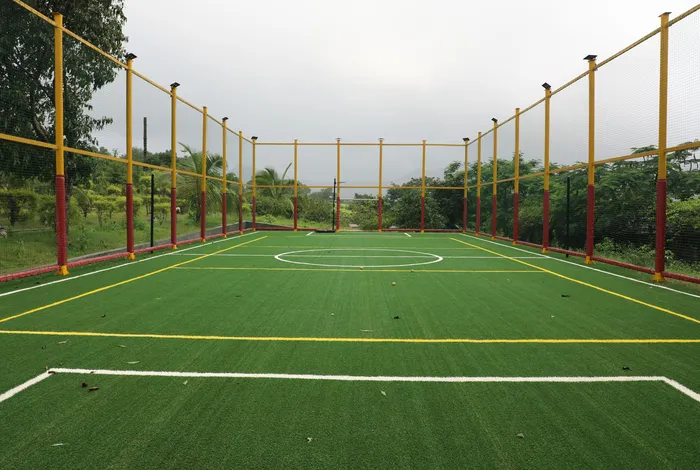
Small-Sided Pitch Sizes: How Big Is a 6+1 or 7+1 Pitch?
The Laws of the Game define no size for 6+1 and 7+1 small-sided pitches. For seven-a-side teams the English FA recommendation of about 55 × 37 m, and for eight-a-side teams the 70 × 50 m used in TFF Istanbul’s U11 league, can serve as references.
Read article ›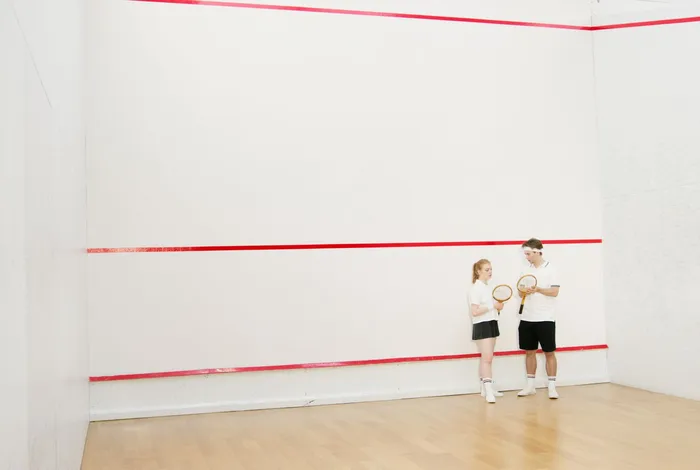
Squash Court Dimensions: Wall Lines and Floor
An international singles squash court is 9.75 m long and 6.40 m wide. The front wall line is at 4.57 m, the service line at 1.78 m and the back wall line at 2.13 m; the top of the tin is 48 cm above the floor.
Read article ›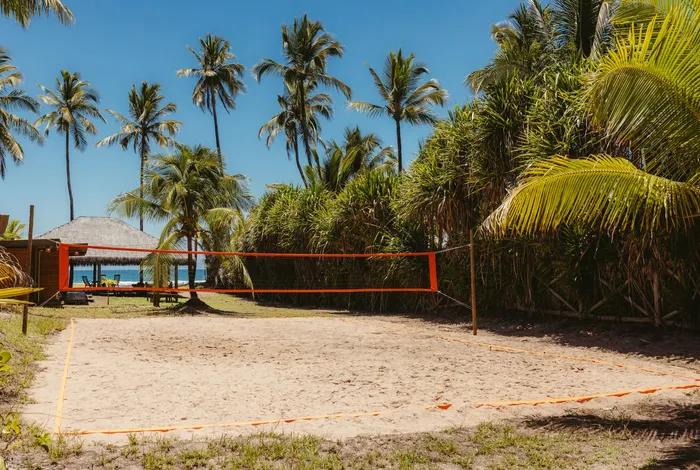
Beach Volleyball Court Dimensions: Court, Sand Depth, Net and Posts
A beach volleyball court measures 16 × 8 m. In official competitions the sand is at least 40 cm deep and the net is 2.43 m high for men and 2.24 m for women. The figures come from the FIVB Official Beach Volleyball Rules 2025–2028.
Read article ›