


A standard athletics track is 400 metres long and consists of two straights and two bends with a radius of 36.50 metres. Lane width, gradients and the synthetic surface are defined in World Athletics documents.
How long is an athletics track?
The dimensions of an athletics track are defined in Rule 14 of the World Athletics Technical Rules and in the federation's Track and Field Facilities Manual (2019 edition). The nominal length of a standard track is 400 m; it consists of two parallel straights and two bends with equal radii. The length is measured 0.30 m outward from the kerb on the inside edge of the track, or 0.20 m from the inner line where there is no kerb on a bend. On the "400m Standard Track" recommended by the Manual, the bends have a radius of 36.50 m and each straight is 84.39 m long. With these dimensions the inner edge measures 398.116 m, while the measurement line 0.30 m further out reaches 400.001 m (2 × π × 36.80 + 2 × 84.39).
| Dimension | Value |
|---|---|
| Nominal track length | 400 m |
| Bend radius (inner edge) | 36.50 m |
| Straight length | 84.39 m |
| Lane width | 1.22 m ± 0.01 m |
| Lane line | 50 mm, white |
| Inner kerb | 50–65 mm high, 50–250 mm wide |
| Lateral inclination | Maximum 1%, towards the inside |
| Inclination in the running direction | Maximum 0.1%, downhill |
| Overall size of an 8-lane track | 176.91 × 92.52 m |
Lane width and number of lanes
In all races up to and including 400 m, each athlete has a separate lane. The lane width is 1.22 m ± 0.01 m including the lane line on the right; lanes are separated by white lines 50 mm wide and all have the same nominal width. The inner lane is measured 0.30 m from the kerb and the other lanes 0.20 m from the outer edge of the line inside them. This is why one lap of an outer lane is longer, and why start lines for races that include bends are staggered to compensate. On tracks built before 1 January 2004, a lane may be up to 1.25 m wide, but when such a track is fully resurfaced the lanes must be brought to the width in the Rules. For competitions in the top categories, the track should have at least eight lanes.
Kerb, gradients and the infield
The inside edge of the track is bordered by a white kerb 50 to 65 mm high and 50 to 250 mm wide. On the straights the kerb may be replaced by a white line 50 mm wide, but it may never be omitted entirely on the bends. The lateral inclination towards the inside edge should not exceed 1% (1:100), and the overall downward inclination in the running direction must not exceed 0.1% (1:1000) between any start and finish line. These limits require the asphalt base to be built to very precise levels before the synthetic surface is laid. The infield of the standard track is large enough for all the throwing events and a standard football pitch of 68 × 105 m.
Synthetic track surfaces
In Turkey synthetic athletics tracks are commonly called "tartan" tracks. The World Athletics Manual divides these surfaces into two construction solutions: water-permeable and non-permeable. The main types are:
- Prefabricated sheet: a rubber sheet made in a factory, delivered in rolls and bonded to the base with adhesive. Its thickness and properties are the same everywhere.
- Cast polyurethane: a two-component liquid polyurethane is spread, typically about 4 mm thick, and rubber crumb is broadcast on it; the layers are repeated and finished with coloured EPDM granules. The surface is non-porous, so correct gradients are especially important.
- Resin-bound crumb with spray coat: a base mat of polyurethane-bound rubber crumb is finished with two sprayed coats of coloured polyurethane paint containing fine rubber. Because it is porous, water does not pond, but the Manual notes that it is far less durable than cast systems.
- Sandwich system: a cast polyurethane layer at least 4 mm thick is applied over a resin-bound crumb base mat of about 9 mm.
The dynamic properties of the surface also have limits: at surface temperatures of 10 to 40 °C, shock absorption must be between 35% and 50% and vertical deformation between 0.6 and 2.5 mm. The required thickness follows the value in the product certificate of the surface used. In high-stress areas, such as the last sections of the high jump, triple jump, pole vault and javelin runways, the surface is thickened to 20 mm, and to 25 mm on the steeplechase water jump landing. Our SBR and SBR+EPDM systems are described on our sports flooring types page.
Track surfaces in winter
The Manual notes that in colder climates, freeze and thaw cycling of water trapped in the surface weakens areas damaged by spikes or separated from the base. Bubbling of the surface is often evidence that water is getting under the synthetic layer; the point of entry should be found at once and the damaged surface repaired. To keep porous surfaces permeable, accumulated dirt is cleaned off from time to time with a high-pressure water spray or by suction. We explain how water is led away from outdoor surfaces in our article on falls and drainage on outdoor courts, and planning for school grounds in school playground courts.
Frequently Asked Questions
How long is an athletics track?
A standard track is 400 m. The length is measured 0.30 m outward from the inner kerb; on the standard track recommended by World Athletics the bend radius is 36.50 m and the straights are 84.39 m.
How wide is a lane on an athletics track?
Each lane is 1.22 m ± 0.01 m wide including the line on the right. Lane lines are 50 mm wide and white.
How many lanes does an athletics track have?
World Athletics requires at least eight lanes for competitions in the top categories, and the standard track drawing in its Manual also has eight lanes.
What is a tartan track?
It is the common name in Turkey for the synthetic surface of athletics tracks. Prefabricated rubber sheet, cast polyurethane, spray-coated crumb and sandwich systems all belong to this group.
Would you like a site survey for your floor? HBK Epoxy Flooring, based in Gaziantep, offers free surveys and quotations in the surrounding provinces.
0507 597 9537 WhatsAppRelated articles
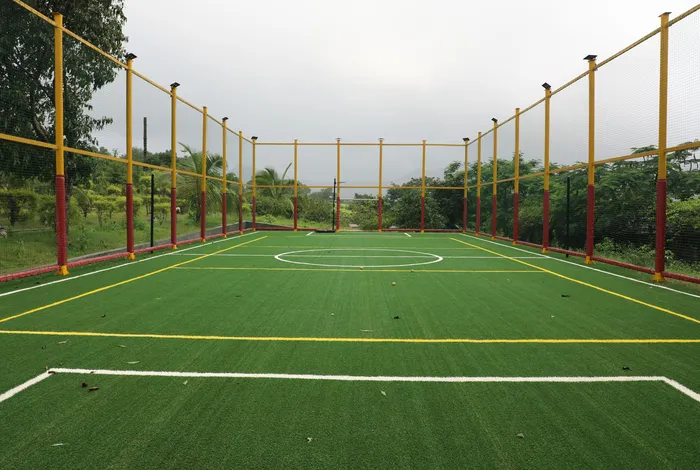
Small-Sided Pitch Sizes: How Big Is a 6+1 or 7+1 Pitch?
The Laws of the Game define no size for 6+1 and 7+1 small-sided pitches. For seven-a-side teams the English FA recommendation of about 55 × 37 m, and for eight-a-side teams the 70 × 50 m used in TFF Istanbul’s U11 league, can serve as references.
Read article ›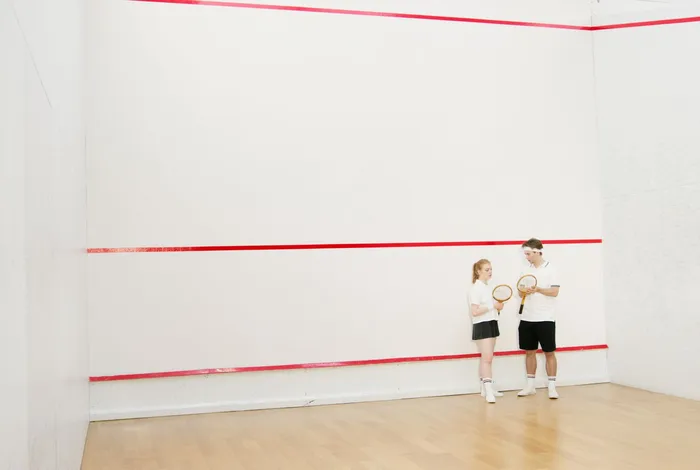
Squash Court Dimensions: Wall Lines and Floor
An international singles squash court is 9.75 m long and 6.40 m wide. The front wall line is at 4.57 m, the service line at 1.78 m and the back wall line at 2.13 m; the top of the tin is 48 cm above the floor.
Read article ›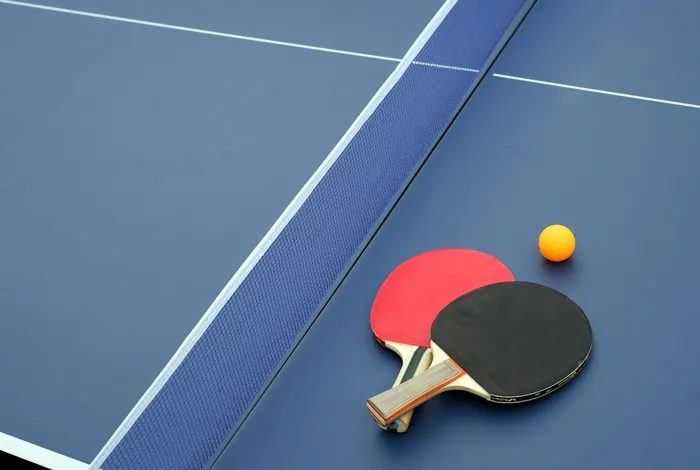
Table Tennis Table Dimensions: Height, Net and Playing Surface
A table tennis table has a playing surface 2.74 m long and 1.525 m wide, 76 cm above the floor. The net stands 15.25 cm above the playing surface. The figures are in chapter 2 of the ITTF Laws.
Read article ›