

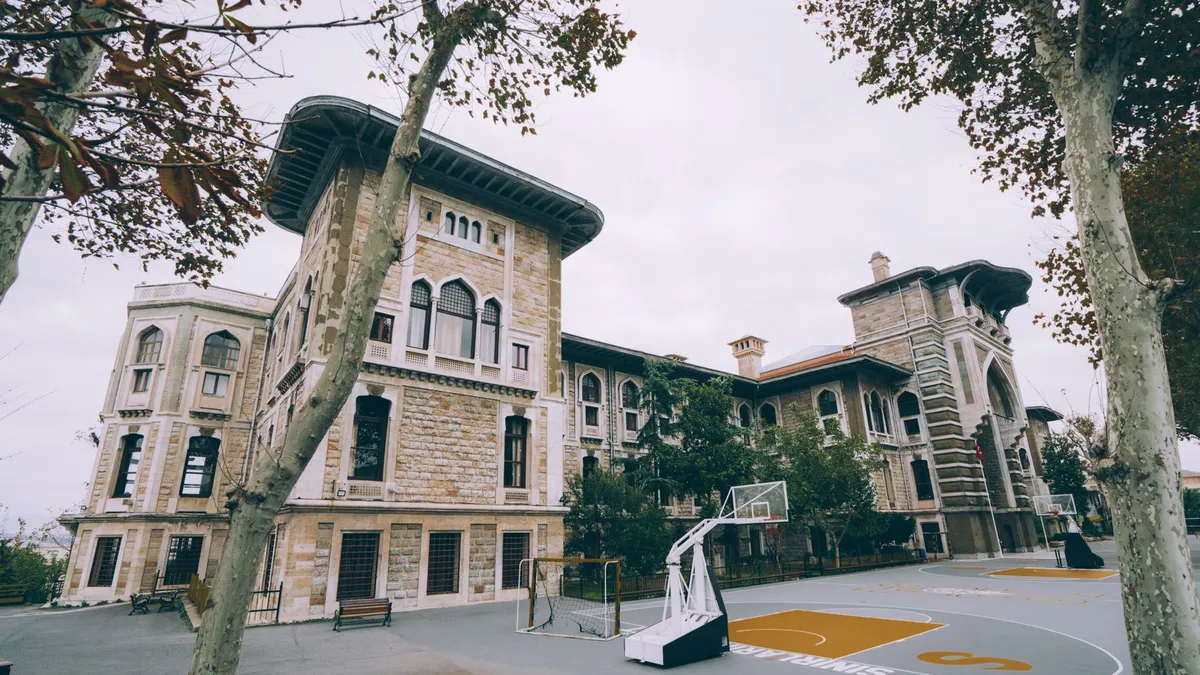
A school court serves hundreds of children at break time as well as PE lessons. The surface must give grip, clean easily and be renewable during the summer holiday.
Heavy, multi-purpose use
A school court is used all day for breaks, lessons and after-school activities. It should be planned to serve several sports and games at once. At break time dozens of children are on the court together, so the plan follows not only the sports but also crowded, scattered use.
Setting aside the ball games area
Guidance 202-022 from the German Social Accident Insurance (DGUV) on children's outdoor play areas calls for ball game areas that are large enough and kept free of other play offers. There should be a spatial or structural separation from quiet areas such as sandpits, and buildings should be protected from balls.
A surface for running and falling children
Where children run and fall, grip and a smooth surface without sharp edges matter. Sand-filled acrylic layers give grip in dry and wet weather. Kerbs, manhole covers and steps at the edge of the court are also finished flush with the surface so they do not become trip points.
Goals and hoops must not tip over
According to the guidance, football and handball goals, basketball units and home-made equipment are anchored so firmly that they do not tip over even when children climb or swing on them: with adequately sized foundations, ground sleeves or counterweights, and following the manufacturer's instructions. The standards the equipment must meet are in courts in residential complexes.
Fixed or mobile?
The guidance notes that a ball games area can be defined with fixed goals and hoops, or equipped with mobile equipment as needed. Very light, small goals of plastic or thin-walled aluminium can be set up without foundations if the manufacturer's instructions are followed. Mobile equipment makes it easier to open the court to different sports; it is carried, not dragged, so it does not scratch the surface.
Ground sleeves and guy ropes
Ground sleeves for removable net and goal posts are planned together with the surfacing. The guidance asks that the ground sleeves and guy ropes of fixtures such as sun shades do not create trip points or obstacles and are clearly visible, for example by placing a coloured post in the sleeve or using warning tape.
Acrylic or rubber?
Acrylic gives an even playing surface for basketball, volleyball and handball lines. Rubber is better for play and fall zones. Many school yards use both. We compare them on our rubber or acrylic page and cover the surface under play equipment in rubber flooring for playgrounds.
Lines for several sports
A school court carries lines for several sports on one surface. A main sport is chosen and the others are painted in different colours (lines on multi-sport courts). If space is tight, a smaller play area can replace a full court; we give the dimensions in basketball court dimensions.
Shade and sun
The guidance asks for shaded places to be clearly preferred and, where there are no trees, for sun sails or umbrellas that stay stable in wind. When siting the court, check where the sun comes from during break times and whether seating stays in the shade.
The court after rain
Standing water makes the court unusable and increases the risk of slipping. On a new court the fall is built in from the start; on an existing one, ponding spots are corrected before coating. The figures are in falls and drainage on outdoor courts.
Planning for the summer holiday
Outdoor acrylic needs dry, mild weather. The summer holiday is ideal both for weather and because the school is empty. The product's temperature and rain conditions are in its data sheet; we give example values in renovating an old tennis court.
A maintenance routine for school courts
Regularly sweeping leaves and sand and fixing spots where water ponds extends the surface's life. For cleaning methods see our acrylic surface cleaning page, and for the school's indoor floors see school and nursery floors.
Frequently Asked Questions
Which surface suits a school court?
Acrylic for the court and rubber for play areas with a higher fall risk.
When should a school court be renewed?
The summer holiday, with dry mild weather and an empty school, is ideal.
Is an acrylic court slippery?
Sand-filled acrylic layers give grip in dry and wet weather.
How are goals and hoops in a school yard anchored?
According to DGUV guidance, so that they do not tip over even when children climb or swing on them: with adequate foundations, ground sleeves or counterweights, following the manufacturer's instructions.
Would you like a site survey for your floor? HBK Epoxy Flooring, based in Gaziantep, offers free surveys and quotations in the surrounding provinces.
0507 597 9537 WhatsAppRelated articles
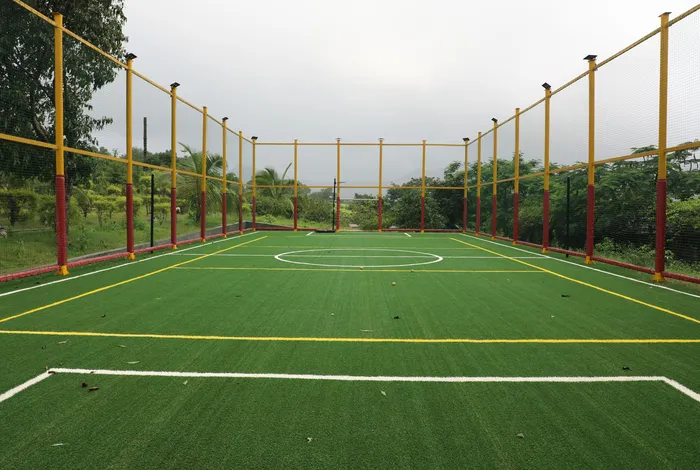
Small-Sided Pitch Sizes: How Big Is a 6+1 or 7+1 Pitch?
The Laws of the Game define no size for 6+1 and 7+1 small-sided pitches. For seven-a-side teams the English FA recommendation of about 55 × 37 m, and for eight-a-side teams the 70 × 50 m used in TFF Istanbul’s U11 league, can serve as references.
Read article ›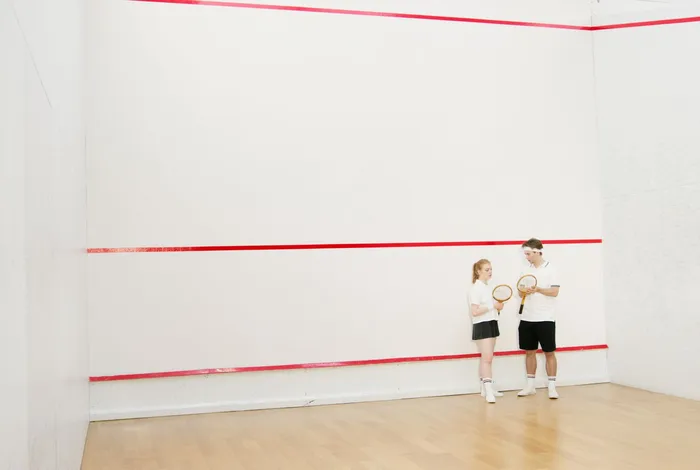
Squash Court Dimensions: Wall Lines and Floor
An international singles squash court is 9.75 m long and 6.40 m wide. The front wall line is at 4.57 m, the service line at 1.78 m and the back wall line at 2.13 m; the top of the tin is 48 cm above the floor.
Read article ›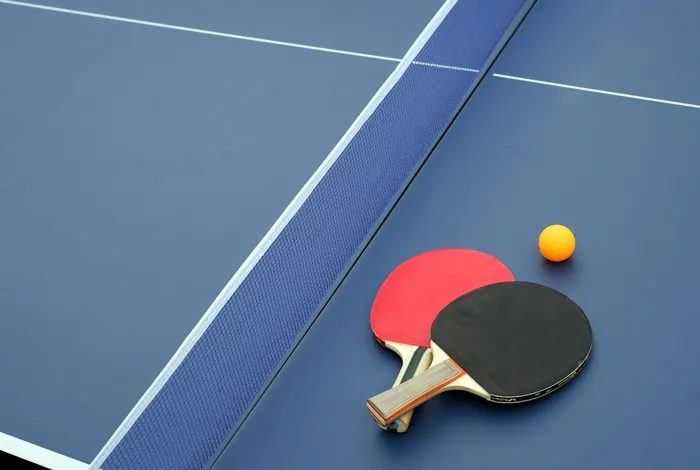
Table Tennis Table Dimensions: Height, Net and Playing Surface
A table tennis table has a playing surface 2.74 m long and 1.525 m wide, 76 cm above the floor. The net stands 15.25 cm above the playing surface. The figures are in chapter 2 of the ITTF Laws.
Read article ›