

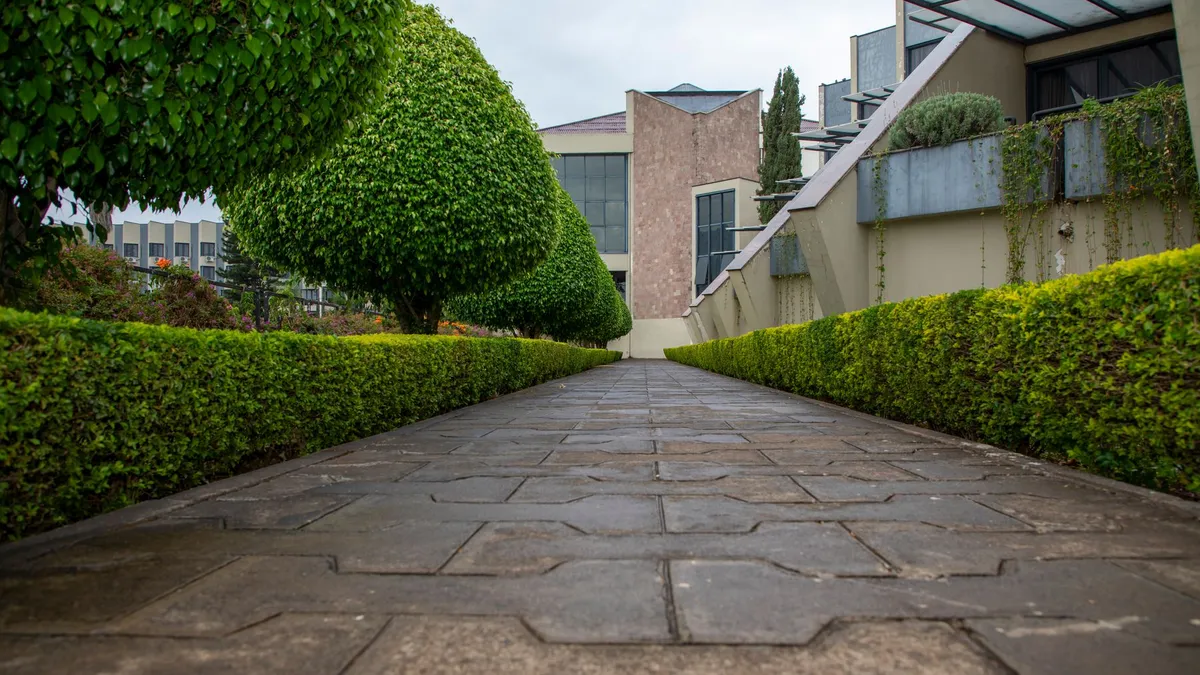
Two things define how stamped concrete looks: the stamp pattern and the colour. The right choice depends on use, architecture and surrounding materials.
Pattern options
Stamped concrete uses natural stone, cobblestone, brick, wood and slate-look stamps. The same area takes on a completely different character with different stamps.
By use
For driveways and car parks, shallow, even patterns are both attractive and practical. Walkways and terraces can take more pronounced stone patterns.
Colour matching
The base colour and the release (antique) colour together give the pattern depth. Tones that match the façade, roof and natural stone in the garden create a coherent look.
Slip resistance
Around pools and on ramps, grip must be considered alongside the pattern.
Decide with a sample
A catalogue photo can look different from a real installation because of light and scale; see a real project or sample if possible.
Frequently Asked Questions
What patterns are available?
Natural stone, cobblestone, brick, wood and slate-look stamps.
Which pattern suits a driveway?
Shallow, even patterns for vehicle traffic.
How is the colour chosen?
Base and release colours are chosen to match the building and garden materials.
Would you like a site survey for your floor? HBK Epoxy Flooring, based in Gaziantep, offers free surveys and quotations in the surrounding provinces.
0507 597 9537 WhatsAppRelated articles
Penetrating Sealers: Protecting Concrete Without a Coating
Not every concrete floor needs a coating. Penetrating sealers soak into the concrete and protect it from dust, water and stains without changing its natural look.
Read article ›
Saw-Cutting Joints in New Concrete Floors: Timing and Spacing
As concrete dries and shrinks it wants to crack somewhere. Joints cut at the right time and spacing make that crack form along a straight line instead of at random.
Read article ›
Concrete Surface Hardeners: A Lasting Fix for Dusting Floors
A dusting concrete floor dirties products and machinery. Surface hardeners strengthen the top of the slab, reducing dust and improving abrasion resistance.
Read article ›