

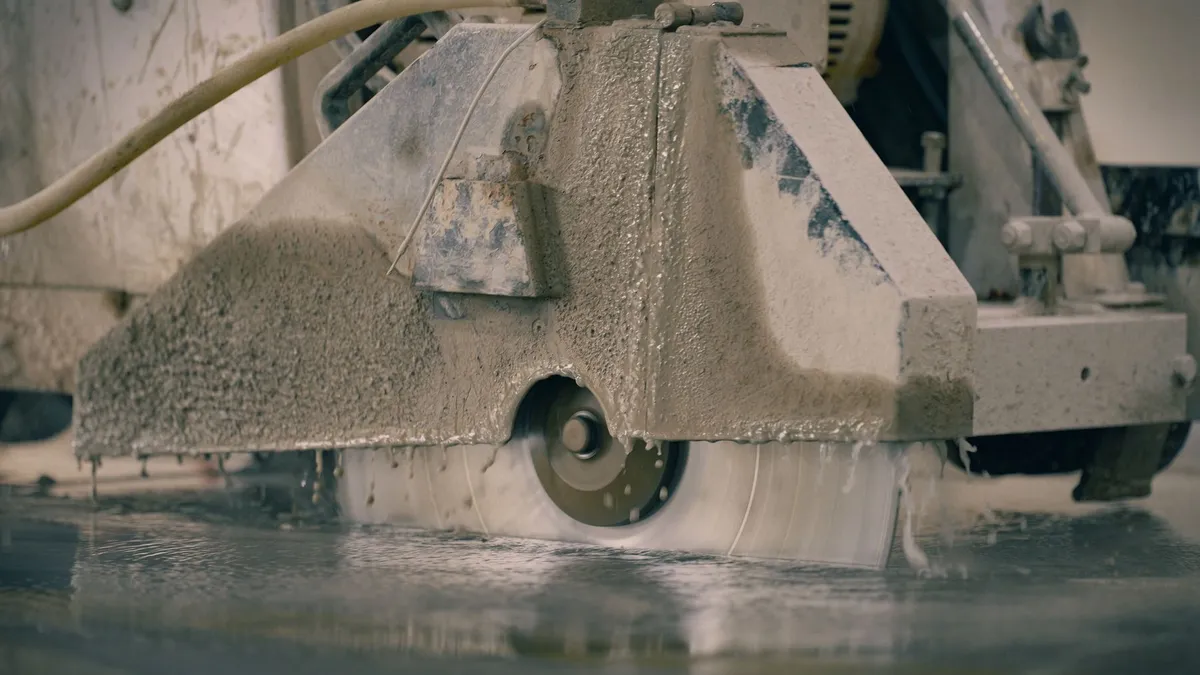
As concrete dries and shrinks it wants to crack somewhere. Joints cut at the right time and spacing make that crack form along a straight line instead of at random.
Why joints are cut
Concrete loses volume as it hardens and dries. This shrinkage creates stress that is released as a crack somewhere. A cut joint gives that crack a prepared line.
Timing
Cut too early and the edges ravel; cut too late and the slab cracks on its own first. Timing depends on temperature and how quickly the concrete gains strength.
Spacing and depth
Joint spacing is designed according to slab thickness and concrete properties. Cut depth must be enough to make the crack form at the joint.
Columns and corners
Stress concentrates around columns and at re-entrant corners, so the joint layout needs extra thought there.
Joint filling
Where forklifts run, a suitable joint filler protects the edges and extends the life of any coating applied later.
Frequently Asked Questions
When are concrete joints cut?
Once the concrete can take the saw but before it cracks on its own.
What if joints are not cut?
Shrinkage stress makes the slab crack at random.
Should joints be filled?
Where forklifts run, a suitable filler is recommended to protect the edges.
Would you like a site survey for your floor? HBK Epoxy Flooring, based in Gaziantep, offers free surveys and quotations in the surrounding provinces.
0507 597 9537 WhatsAppRelated articles
Choosing Stamped Concrete Patterns and Colours
Two things define how stamped concrete looks: the stamp pattern and the colour. The right choice depends on use, architecture and surrounding materials.
Read article ›
Penetrating Sealers: Protecting Concrete Without a Coating
Not every concrete floor needs a coating. Penetrating sealers soak into the concrete and protect it from dust, water and stains without changing its natural look.
Read article ›
Concrete Surface Hardeners: A Lasting Fix for Dusting Floors
A dusting concrete floor dirties products and machinery. Surface hardeners strengthen the top of the slab, reducing dust and improving abrasion resistance.
Read article ›