

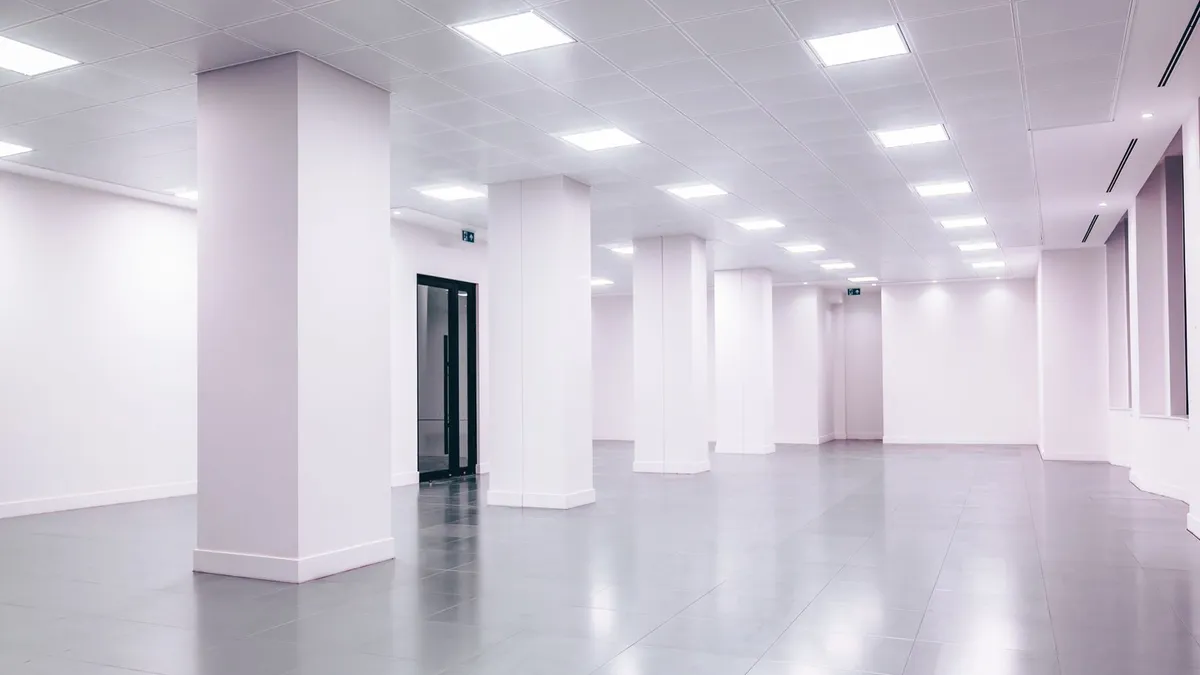
In a cleanroom the floor must neither shed nor hold dust; it must withstand disinfectants and, where needed, control static electricity.
Dust is the enemy of a cleanroom
In pharmaceutical and cosmetics production, airborne particle counts are kept under control. The floor must not upset this balance: a surface that wears into dust, or traps dust in its pores, is not compatible with cleanroom conditions. The floor is the largest surface in a cleanroom and the one touched most every day.
What GMP asks of the floor
The premises and equipment chapter of the European Union's Good Manufacturing Practice (GMP) guide is clear: where starting and packaging materials or intermediate products are exposed to the environment, interior surfaces, meaning walls, floors and ceilings, should be smooth, free from cracks and open joints, should not shed particles, and should allow easy and effective cleaning and, if necessary, disinfection.
Sterile manufacturing areas
The annex on sterile products (Annex 1, 2022) requires all exposed surfaces in cleanrooms and critical zones to be smooth, impervious and unbroken. It also requires materials to minimise the generation of particles and to withstand repeated application of cleaning, disinfectant and sporicidal agents. Doors should be designed to avoid recesses that cannot be cleaned, which is why the annex notes that sliding doors may be undesirable; the junction between floor and door threshold is planned with the same care.
A continuous, smooth surface
Smooth, seamless systems such as self-levelling epoxy wipe clean easily and do not collect dirt in corners. Coved skirting at wall junctions completes this continuity. The guide asks for recesses that are hard to clean to be avoided, so pipe, leg and service penetrations through the floor are sealed into the coating.
Drains and channels
According to the GMP guide, drains should be of adequate size and have trapped gullies, open channels should be avoided where possible and, if necessary, kept shallow for cleaning and disinfection. Under the sterile annex, sinks and drains are not allowed at all in grades A and B, the highest cleanliness grades; floor drains in lower grades are fitted with traps or water seals that prevent back-flow.
Resistance to disinfectants
Alcohol, peroxide and chlorine-based disinfectants are used frequently. The long-term resistance of the chosen system to these substances and to sporicidal agents should be checked in its technical data sheet. The list of products used, with their concentrations, is sent to the manufacturer; we explain how to read the chart in chemical resistance chart.
GMP in cosmetics manufacturing
Article 8 of the European Union cosmetics regulation (1223/2009) requires cosmetic products to be manufactured in line with good manufacturing practice; where manufacture follows the EN ISO 22716 standard, compliance is presumed. In Turkey the legislation of the Turkish Medicines and Medical Devices Agency (TİTCK) applies; for a specific facility, consult the quality unit and a specialist.
Static electricity
Where powdered raw materials are handled or sensitive electronics are present, static is a risk. Antistatic (ESD) systems are considered for these areas. We cover standards and testing in laboratory floors and the no-polish maintenance rule in stains and scratches on epoxy floors.
Colour and zoning
Separating areas of different cleanliness classes by colour visually organises the flow of people and materials; colour boundaries are drawn to match doors and transfer points. Light colours show dirt and spills sooner; other criteria for choosing colour are in choosing colours for industrial floors.
Repairing cracks and damage
The crack-free requirement applies throughout use, not only at installation. Cracks in the base slab are repaired before coating, and chips and lifting that appear later are sealed without delay, because every opening becomes a home for dirt and micro-organisms (joint and crack repair).
Renovating a working facility
Because production areas cannot close for long, renovation is planned section by section, and clean zones are screened against odour and dust (phased installation). A renovated area returns to production once the quality unit's cleaning and acceptance steps are complete. Similar hygiene needs in hospitals are covered in hospital and clinic floors.
Frequently Asked Questions
Which floor is used in cleanrooms?
Dust-free, seamless, impervious and easy-to-clean systems; usually self-levelling epoxy or similar solutions.
Do disinfectants damage the coating?
Chemical resistance should be checked in the data sheet; a suitable system withstands regular disinfection.
Can floor drains be fitted in pharmaceutical production?
The EU GMP guide asks for trapped drains and for open channels to be avoided; in grade A and B areas of sterile manufacturing, sinks and drains are not allowed.
How is the floor chosen where powdered raw materials are handled?
Antistatic (ESD) systems are considered against static where powders and sensitive electronics are present; no polish is used on these floors.
Would you like a site survey for your floor? HBK Epoxy Flooring, based in Gaziantep, offers free surveys and quotations in the surrounding provinces.
0507 597 9537 WhatsAppRelated articles

Parking Space Dimensions: Bay Sizes Under Turkey's Car Park Regulation
Turkey's Car Park Regulation sets a minimum of 2.40×4.90 metres for a car parking space and a minimum width of 3.50 metres for an accessible bay. Line layouts are planned with these sizes and the aisle.
Read article ›
Car Park Floor Coatings: Protection Against Salty Water and Slush in Winter
In winter, cars bring snow, slush and road de-icing salt into car parks. This salty water can penetrate concrete and reach the rebar; the right coating, falls and maintenance protect the deck.
Read article ›
Is Epoxy Flooring Suitable for Homes? Living Room, Kitchen and Bathroom
Epoxy can be used at home too, but a house brings different expectations from a factory. The substrate, grip in wet rooms and sunny windows decide the right choice.
Read article ›