

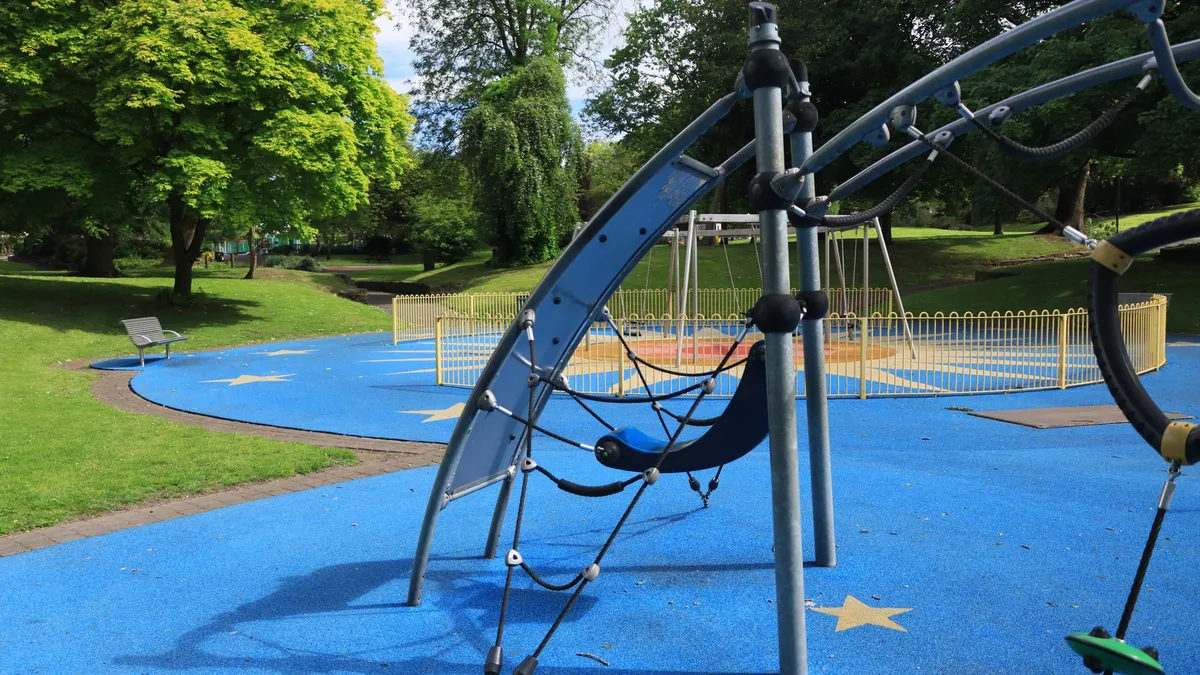
The main job of a playground surface is to cushion falls. Thickness is chosen by the equipment's fall height; decoration comes after that.
The surface's real job
Reducing the impact when a child falls from swings, slides or climbing frames is the playground surface's most important job. Concrete and hard surfaces are unsuitable for this reason. Standards judge the surface by measuring the impact a falling head would take; colour, pattern and theme come after that.
From what height is it required?
Under EN 1176-1, the European standard for playground equipment (TS EN 1176-1 in Türkiye), any equipment with a free height of fall above 600 mm must stand on an impact-attenuating surface, and that surface must cover the whole impact area of the equipment. The attenuation needed rises with height. The standard sets separate limits for materials such as grass, topsoil, sand and bark, while synthetic surfaces such as rubber are certified with the EN 1177 test.
Critical fall height
EN 1177 determines how high a fall a synthetic surface can handle. In the laboratory a headform fitted with an accelerometer is dropped onto the surface from increasing heights, and the severity of each impact is recorded as HIC (head injury criterion) and peak acceleration. The critical fall height is the lower of the heights at which HIC reaches 1000 or the acceleration reaches 200 g. The rule is simple: the free height of fall of the equipment must not exceed the critical fall height of the surface.
How thickness is set
The higher the equipment's fall height, the thicker and more impact-absorbing the surface must be. In Europe the EN 1177 standard defines this relationship with a test method. Thickness is therefore not guessed; it is read from the thickness and critical fall height pairs in the product's test report. Laboratory measurements show that critical fall height grows with thickness, but each extra centimetre adds less than the one before. A value for one product cannot be transferred to another, because granule size and production method change the result.
The impact area
The surface must cover not just the ground under the equipment but every area a child could fall onto. For a swing this area extends forwards and backwards in the direction of swing, and the exit of a slide needs its own area too. The dimensions are given in the equipment's installation documents and in the standard, and the surface is laid out from that drawing.
Poured or tiles?
Poured-in-place rubber is seamless and follows free shapes; rubber tiles install quickly and can be replaced piece by piece. The choice depends on layout and budget. A poured system usually has an SBR base layer with coloured EPDM granules on top, and the thickness is adjusted in the base layer. Ready-made options are on our rubber tile flooring and interlocking rubber flooring pages.
Base and drainage
Rubber surfacing can be permeable; the base beneath must be prepared to carry water away. The base may be concrete, asphalt or compacted crushed stone; in every case the direction and outlet of the water are planned from the start, because a base that holds water for long periods harms the bond and the life of the rubber. Falls and edge drainage are explained in outdoor court drainage.
On-site checks after installation
EN 1177 describes two methods: one finds the critical fall height in the laboratory, the other checks on site whether the installed surface is adequate for the equipment above it. For school, municipal and residential playgrounds, an on-site test may be requested at handover and at periodic inspections, so the test report and a record of the installed thickness are kept.
Colour and care
Colourful patterns make a playground inviting. Regular sweeping and timely repair of loose edges keep it safe. The most heavily worn spots, such as under swings and at slide exits, are checked separately; a section that has worn thin also loses impact absorption and is renewed. We compare where rubber and acrylic surfaces fit on our rubber or acrylic page; for schools and nurseries see school and nursery flooring, and for planning a play area together with a court on a housing estate see residential sports courts.
Frequently Asked Questions
How thick should playground surfacing be?
It depends on fall height; higher equipment needs a thicker surface. Thickness is chosen from the critical fall height in the product's EN 1177 test report.
Poured rubber or tiles?
Poured for free-form areas; tiles for quick installation and piece-by-piece replacement.
Does rubber surfacing hold water?
It can be permeable; the base must be prepared for drainage.
What does critical fall height mean?
It is the greatest fall height at which a surface keeps head impact within an acceptable limit. Under EN 1177 it is the lower of the heights at which HIC 1000 or 200 g is reached.
Would you like a site survey for your floor? HBK Epoxy Flooring, based in Gaziantep, offers free surveys and quotations in the surrounding provinces.
0507 597 9537 WhatsAppRelated articles
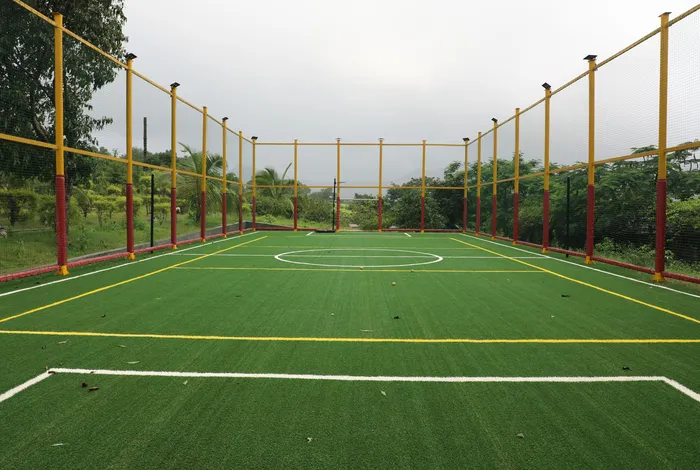
Small-Sided Pitch Sizes: How Big Is a 6+1 or 7+1 Pitch?
The Laws of the Game define no size for 6+1 and 7+1 small-sided pitches. For seven-a-side teams the English FA recommendation of about 55 × 37 m, and for eight-a-side teams the 70 × 50 m used in TFF Istanbul’s U11 league, can serve as references.
Read article ›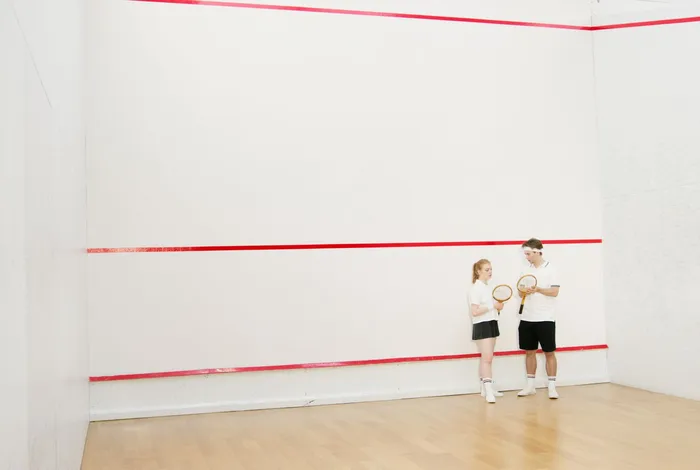
Squash Court Dimensions: Wall Lines and Floor
An international singles squash court is 9.75 m long and 6.40 m wide. The front wall line is at 4.57 m, the service line at 1.78 m and the back wall line at 2.13 m; the top of the tin is 48 cm above the floor.
Read article ›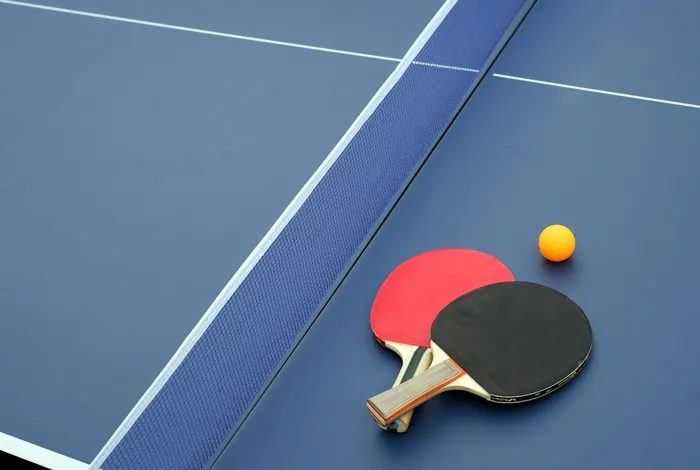
Table Tennis Table Dimensions: Height, Net and Playing Surface
A table tennis table has a playing surface 2.74 m long and 1.525 m wide, 76 cm above the floor. The net stands 15.25 cm above the playing surface. The figures are in chapter 2 of the ITTF Laws.
Read article ›