


When three sports share one surface, players can lose track of which line counts. The answer is a plan that highlights the main sport and separates the others by colour.
Why it gets confusing
On multi-sport courts basketball, volleyball and sometimes handball lines overlap. If they are all the same colour, it is unclear which line applies during play. The confusion affects referees as well as players, and every ball disputed as in or out interrupts the flow of the game.
Choosing the main sport
The most played sport gets the most visible lines, usually white. Other sports are shown in thinner or differently coloured lines. On school and residential courts this decision is made together with the users; how often each sport is played shapes the colour plan (residential sports courts).
What the rules say about lines
The official rules of the different sports keep line widths close to each other. Under the FIVB volleyball rules (2025–2028), lines are 5 cm wide and must be a light colour different from both the floor and any other lines. In the IHF handball rules, the goal lines are 8 cm and all other lines 5 cm. Pickleball lines are also about 5 cm (pickleball courts). Since the widths are similar, colour is the main way to tell the sports apart.
Colour and contrast
Line colours must contrast with the court colour. On dark blue or green surfaces, white and yellow lines are easy to tell apart. Close shades such as red and orange blur together from a distance and in evening light, so the second and third sports are given colours that are clearly distinct from each other.
Using colour zones
Filling the basketball key and centre circle in a different colour separates sports without adding more lines. The handball rules allow this too: a line separating two adjacent areas may be replaced by a difference in floor colour. In FIVB official competitions, the playing court and free zone are required to be in different colours.
Where lines cross
Lines of different sports cross at many points. At each crossing, the main sport's line runs unbroken and the second sport's line is interrupted. If this rule is applied the same way across the whole court, players soon learn which line takes priority. The ends of the interrupted line are finished straight and clean, and paint does not overlap at the crossing.
Which sports will fit?
Dimensions are checked before the line plan. A handball court is 40×20 m, and the rules require a safety zone of at least 1 m along the side lines and 2 m behind the goal lines. A volleyball court is 18×9 m, surrounded by a free zone at least 3 m wide on all sides. Basketball dimensions are covered in basketball court dimensions.
Measuring before painting
The lines are first shown on a scaled plan and then transferred to the court with string and tape. Right angles are checked by measuring the diagonals; the IHF guidelines, for example, call for the diagonals of a 40×20 m handball court to measure 44.72 m from outer corner to outer corner. For each dimension, the relevant rules are checked for which edge of the line it is measured to.
Lines on outdoor courts
On outdoor courts, lines are painted with an acrylic line paint compatible with the surfacing system. The FIVB rules prohibit lines made of solid materials on outdoor courts and allow a drainage fall of 5 mm per metre in the surface. Falls and puddles are discussed in outdoor court falls and drainage; for acrylic systems see our acrylic basketball court and acrylic volleyball court pages.
Adding lines later
New sport lines can be added to acrylic courts later, but planning from the start gives a neater result. If old lines are to go, they are painted over in the court colour; to avoid shade differences, a new colour coat is often applied to the whole surface. Resurfacing steps are in resurfacing an old tennis court, and the layer build-up on our acrylic court coating layers page.
Frequently Asked Questions
How are lines separated on multi-sport courts?
Each sport gets its own line colour, with the main sport most visible.
Which line colour shows best?
One that contrasts strongly with the court; white and yellow stand out on dark surfaces.
Can lines for a new sport be added later?
Yes; lines can be added to acrylic courts later.
How wide are volleyball court lines?
Under the FIVB rules they are 5 cm wide and must be a light colour different from the floor and from any other lines.
Would you like a site survey for your floor? HBK Epoxy Flooring, based in Gaziantep, offers free surveys and quotations in the surrounding provinces.
0507 597 9537 WhatsAppRelated articles
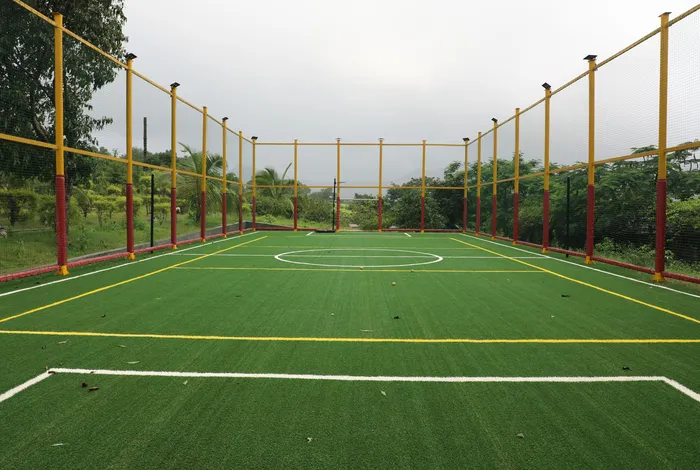
Small-Sided Pitch Sizes: How Big Is a 6+1 or 7+1 Pitch?
The Laws of the Game define no size for 6+1 and 7+1 small-sided pitches. For seven-a-side teams the English FA recommendation of about 55 × 37 m, and for eight-a-side teams the 70 × 50 m used in TFF Istanbul’s U11 league, can serve as references.
Read article ›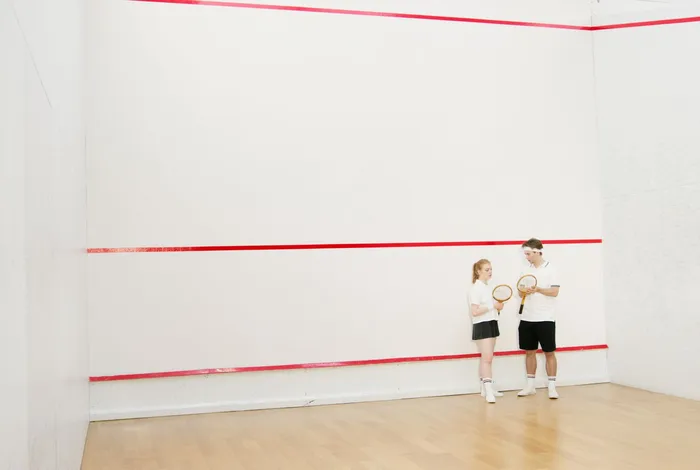
Squash Court Dimensions: Wall Lines and Floor
An international singles squash court is 9.75 m long and 6.40 m wide. The front wall line is at 4.57 m, the service line at 1.78 m and the back wall line at 2.13 m; the top of the tin is 48 cm above the floor.
Read article ›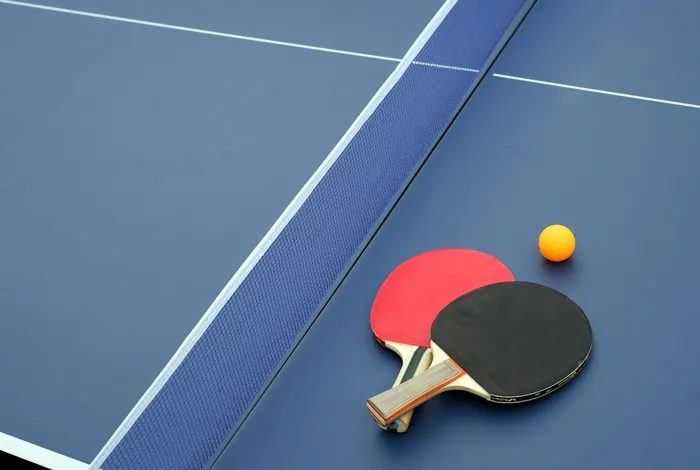
Table Tennis Table Dimensions: Height, Net and Playing Surface
A table tennis table has a playing surface 2.74 m long and 1.525 m wide, 76 cm above the floor. The net stands 15.25 cm above the playing surface. The figures are in chapter 2 of the ITTF Laws.
Read article ›