

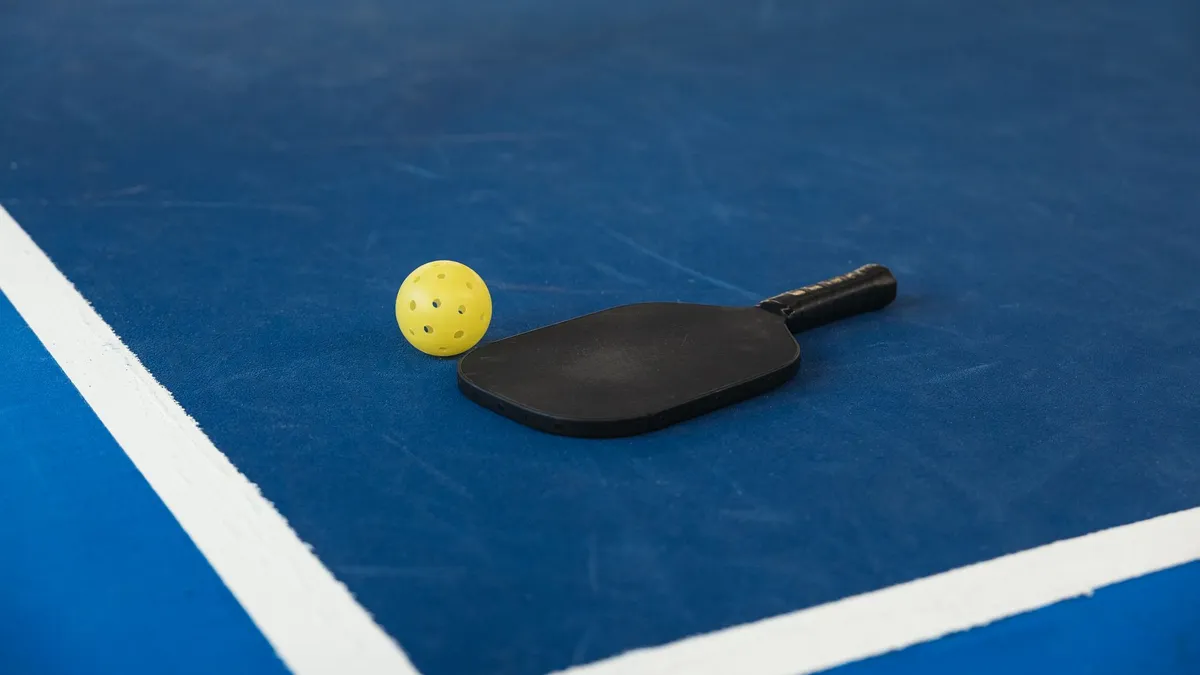
Pickleball is played on roughly a quarter of a tennis court. Rather than building a new court, adding lines to an existing acrylic court is often enough.
What is pickleball?
It combines elements of tennis, badminton and table tennis and is played with paddles and a perforated plastic ball. Easy to learn, it is spreading among players of all ages. Because the court is small, school yards, residential complexes and existing tennis courts are often considered for pickleball (residential sports courts).
Court size
The playing area is 20×44 feet, about 6.10×13.41 metres, and singles and doubles use the same court. Under the 2026 USA Pickleball rulebook, measurements are taken to the outside edge of the perimeter lines and the non-volley zone lines. When marking out, the line is therefore painted on the inner side of each measuring point.
The non-volley zone
On each side of the net there is a zone where volleying is not allowed; players call it the "kitchen". It extends 7 feet, about 2.13 metres, from the net and runs across the full width of the court. The lines bounding the zone count as part of it, and the rulebook adds that the zone is two-dimensional and does not extend above the playing surface.
Centreline and service courts
On each half of the court the centreline runs from the non-volley zone line to the baseline and divides the right and left service courts. The service courts include their adjacent baseline, sideline and centreline. The serve is hit from the serving area behind the baseline, which is bounded by the imaginary extensions of the sideline and the centreline.
Line width and colour
According to the rulebook, all lines should be 2 inches, about 5.08 cm, wide and the same colour. The line colour must contrast clearly with both the playing surface and the court colour. On acrylic courts, the lines are painted with line paint between masking tape once the colour coats are complete.
Space around the court
Players need free space outside the lines to run into. The rulebook gives a minimum playing surface of 30×60 feet (about 9.14×18.29 m), and the recommended size for new construction and tournament courts is 34×64 feet (about 10.36×19.5 m). The surfacing covers this whole area, and fences and benches are planned outside it.
Net height
A pickleball net is slightly lower than a tennis net. Under the rulebook, the top of the net must be 36 inches (about 91.4 cm) above the surface at the sidelines and 34 inches (about 86.4 cm) at the centre of the court, with a tolerance of about ±0.6 cm in both cases. A centre strap may be fitted to adjust the centre height. Tennis net heights are given in resurfacing an old tennis court.
Net and posts
Measured between their inside faces, the posts should be 22 feet (about 6.71 m) apart, with a diameter of no more than 3 inches (about 7.6 cm). The net is at least 6.63 m long and at least about 76 cm deep. Permanent or portable net systems can be used; sleeves for permanent posts are set before the surfacing goes down.
Choosing the surface
As with tennis and basketball, an acrylic surface is preferred. A lightly textured finish gives a true bounce and good footing. The layers of an acrylic system are explained on our acrylic court coating layers page, and the court system on our acrylic tennis court page.
Orientation and sun
Outdoors, orientation directly affects playing comfort. USA Pickleball recommends that outdoor courts run north–south, so that the low morning and late-afternoon sun shines less into players' eyes. For a new court, orientation is planned together with falls and drainage (outdoor court falls and drainage).
Converting existing courts
Several pickleball courts can be marked inside one tennis court. How many fit is worked out by measuring the court together with its surrounds and allowing the recommended playing surface for each court. Using a different colour from the tennis lines keeps the two games apart; the colour plan is covered in multi-sport court lines. The surface is cleaned before new lines go on (acrylic court maintenance).
Frequently Asked Questions
How big is a pickleball court?
The playing area is 20×44 feet, about 6.10×13.41 metres; with its surrounds, the minimum playing surface is about 9.14×18.29 metres.
Can pickleball be played on a tennis court?
Yes; pickleball lines in a different colour can be marked inside it.
Which surface suits pickleball?
An acrylic surface, as for tennis and basketball.
How high is a pickleball net?
Under the USA Pickleball rulebook, the top of the net is about 91.4 cm (36 inches) high at the sidelines and about 86.4 cm (34 inches) at the centre.
Would you like a site survey for your floor? HBK Epoxy Flooring, based in Gaziantep, offers free surveys and quotations in the surrounding provinces.
0507 597 9537 WhatsAppRelated articles
Small-Sided Pitch Sizes: How Big Is a 6+1 or 7+1 Pitch?
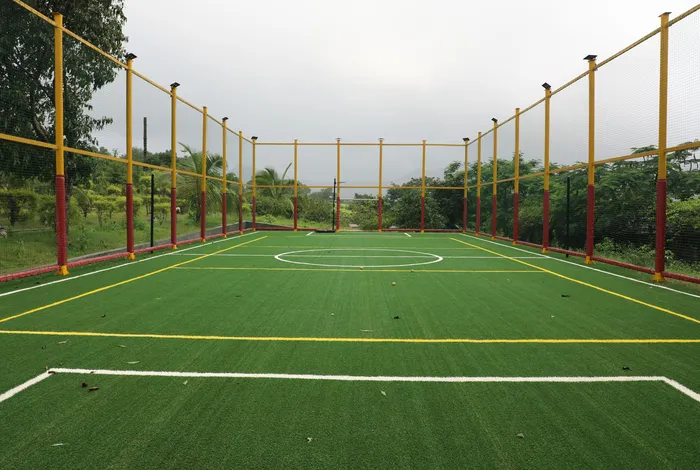
The Laws of the Game define no size for 6+1 and 7+1 small-sided pitches. For seven-a-side teams the English FA recommendation of about 55 × 37 m, and for eight-a-side teams the 70 × 50 m used in TFF Istanbul’s U11 league, can serve as references.
Read article ›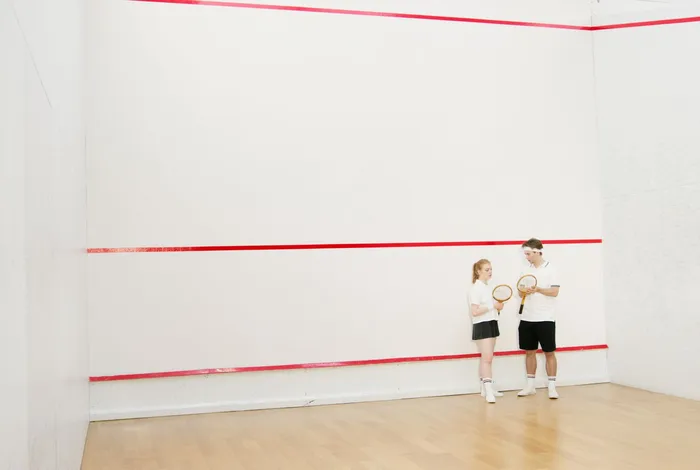
Squash Court Dimensions: Wall Lines and Floor
An international singles squash court is 9.75 m long and 6.40 m wide. The front wall line is at 4.57 m, the service line at 1.78 m and the back wall line at 2.13 m; the top of the tin is 48 cm above the floor.
Read article ›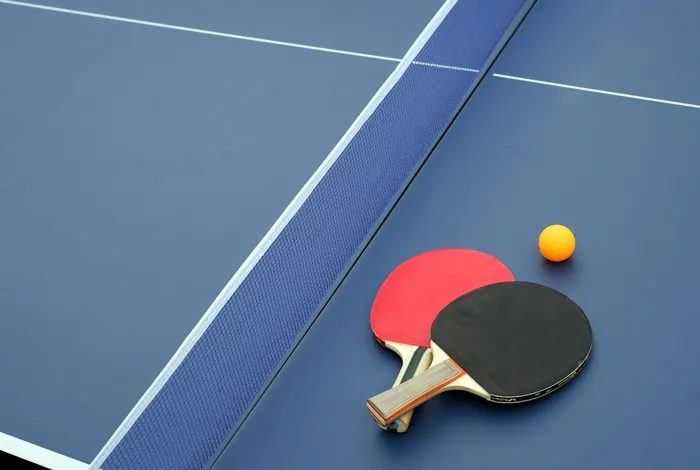
Table Tennis Table Dimensions: Height, Net and Playing Surface
A table tennis table has a playing surface 2.74 m long and 1.525 m wide, 76 cm above the floor. The net stands 15.25 cm above the playing surface. The figures are in chapter 2 of the ITTF Laws.
Read article ›