

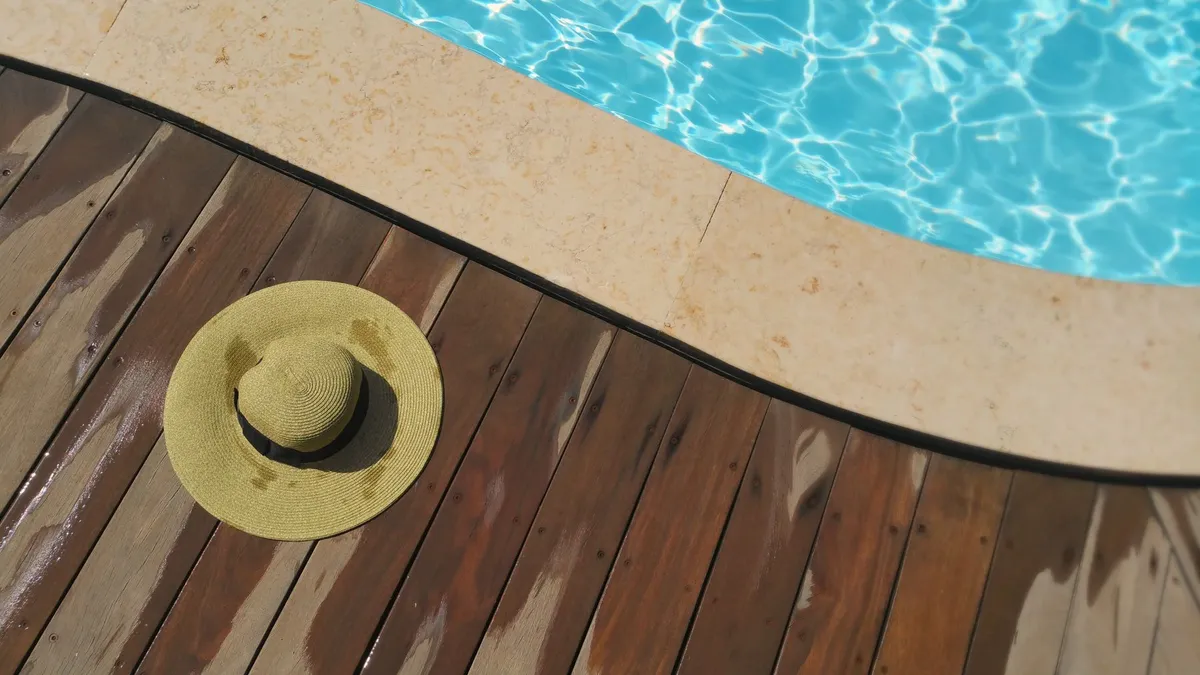
Pool decks are walked on barefoot and wet. Grip comes first; then staying cool in the sun and resisting chlorine.
Bare feet and wet floors
A pool surround is one of the few places people walk barefoot and wet. A slippery surface sharply raises the risk of falls, so texture is the most important criterion. In Germany, floors in these areas follow the DGUV 207-006 guide of the German Social Accident Insurance; its latest edition is dated December 2025.
Which zone needs which group?
The guide divides barefoot areas into three groups, A, B and C, with the slip resistance required rising from A to C. Barefoot corridors that stay largely dry and changing rooms are group A; pool surrounds, shower areas, steam rooms and disinfection spray zones are group B. The test angles behind the groups are given in slip resistance ratings.
Steps and ramps into the water
The highest requirement is group C: stairs and ladders leading into the water, access to diving platforms and slides, inclined pool edges and ramps in the pool surround steeper than 6% all belong here. The guide also asks for step nosings to be rounded and, on stairs leading into the water, to be clearly marked in a contrasting colour.
When shoes are worn too
Lifeguards and maintenance staff also walk around the pool in shoes. The guide states that if a barefoot area is routinely used with footwear as well, the R class from the workplace rule ASR A1.5 must also be met; that rule's table specifies R10 for pool surrounds. One ceramic manufacturer does not consider R10 sufficient there and recommends R11 combined with group B.
Drainage
Falls are set away from the pool or towards drains so splashed water does not run back into the pool or pond on the deck. To keep walkways free of puddles, the DGUV guide recommends falls of at least 2% on pool surrounds and at least 3% in showers, plus enough floor drains. Overflow channel gratings are laid flush with the floor. For falls and drains on open terraces, see balcony and terrace coatings.
Evenness and trip points
The floor must have no holes, trip points or dangerous slopes. The guide notes that on level floors a height difference of more than 4 mm already counts as a trip point. The surface must feel comfortable and painless underfoot; sharp edges are not acceptable and are broken or chamfered where necessary. The anti-slip texture itself must not pose a risk of injury either.
Heat
Dark surfaces can get too hot to walk on barefoot in summer sun. Light tones stay cooler. Colour choice therefore matters especially on pool edges that get sun all day; before deciding, a sample can be left in the sun for a few days and tried barefoot.
Chlorine and chemicals
Chlorine and maintenance chemicals in pool water are in constant contact with the deck. The surface and its sealer must resist them. When choosing a coating or sealer, look up each chemical used at the pool, and its concentration, in the manufacturer's resistance chart (how to read a chemical resistance chart).
Cleaning affects grip
The guide stresses that cleaning and care have a decisive effect on slip resistance. Cleaning, disinfection and care products must not form a film or impair grip, and gentle machines, preferably brush machines, are recommended for large areas. A cleaning plan suited to the floor is drawn up before the pool opens and reviewed regularly.
Measurements and retained samples
For a new floor the guide recommends keeping at least 2 m² from the same batch for later comparison, a baseline measurement for each floor type before the final construction clean, a control measurement after that clean and before first use, and further measurements in later years where needed. Changes in grip can then be tracked in figures.
Options
Stamped concrete, stone carpet and textured decorative coatings are the main options for pool decks, each with its own texture and maintenance needs. We compare the first two in stone carpet or stamped concrete; for the systems see our stamped concrete flooring and stone carpet flooring pages, and for looking after sealed surfaces resealing stamped concrete.
Frequently Asked Questions
What matters most on a pool deck?
Grip for wet bare feet.
Does a pool deck get hot in the sun?
Dark colours can get very hot; light tones stay cooler.
Is a pool deck affected by chlorine?
It is in constant contact; choose a chlorine-resistant surface and sealer.
What slip resistance group do steps into a pool need?
Under the DGUV 207-006 guide, stairs leading into the water are in the highest group, C; the pool surround itself is group B.
Would you like a site survey for your floor? HBK Epoxy Flooring, based in Gaziantep, offers free surveys and quotations in the surrounding provinces.
0507 597 9537 WhatsAppRelated articles
Screed vs Concrete: What Is the Difference and Where Is Each Used?
Concrete is a load-bearing building material; screed is a layer that levels the surface that will receive a floor finish. Their mixes, their roles and the checks needed before coating are different.
Read article ›
Pouring Concrete in Cold Weather: What Temperature, and How to Protect It
Concrete can be poured in winter; what matters is not the air but the temperature of the concrete and keeping it from freezing until it gains strength. TS 1248 sets the rules.
Read article ›
Choosing Stamped Concrete Patterns and Colours
Two things define how stamped concrete looks: the stamp pattern and the colour. The right choice depends on use, architecture and surrounding materials.
Read article ›