

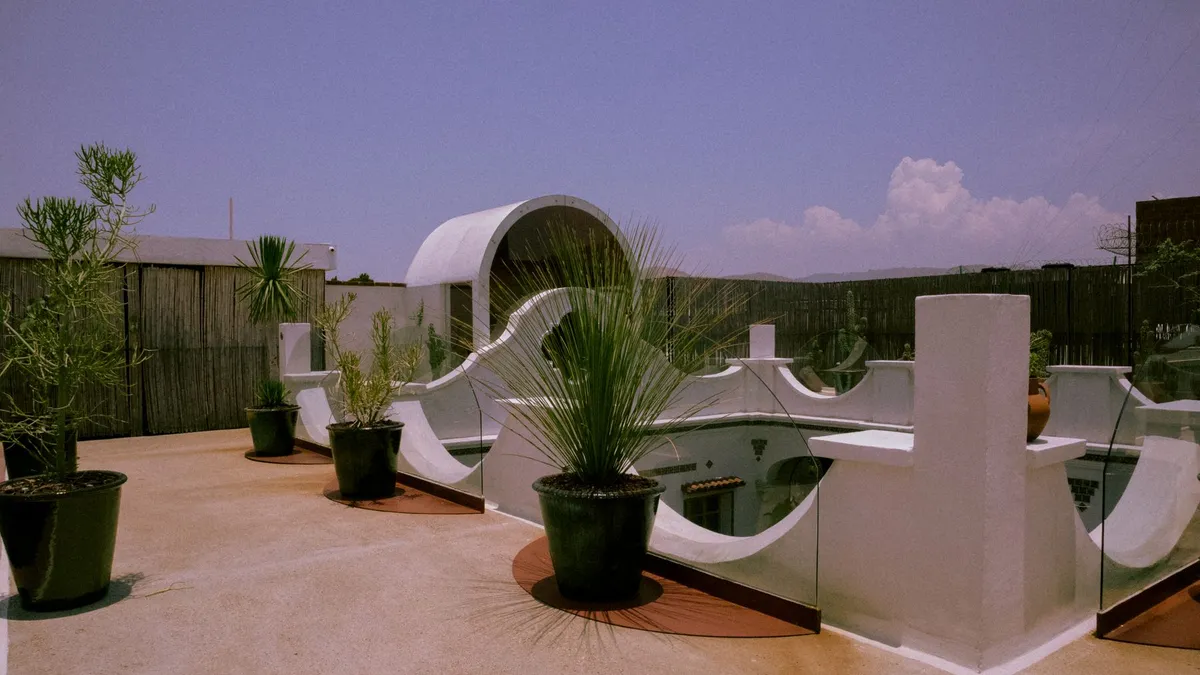
A balcony floor must protect the flat below from water, must not yellow in the sun and must not be slippery in rain; UV-resistant polyurethane usually does all three.
Leaks are the biggest problem
On balconies and terraces, tile grout and cracks take in water over time, which then leaks into the ceiling and walls below. A seamless, flexible coating closes these paths. Before coating, however, you need to understand where the water gets in. Damp in the flat below rarely starts in the middle of the balcony; it usually comes from the door threshold, the holes where railing posts enter the concrete, the area around the drain or the wall-to-floor junction. If the leak comes from these points, coating only the flat surface will not solve it.
Sun and UV
Standard epoxy can yellow and chalk in sunlight; the Sikafloor-264 data sheet, for example, notes that discolouration and colour variation may occur under direct sunlight. Outdoors, UV-resistant polyurethane topcoats or polyurethane systems are preferred. We compare the two materials on our polyurethane or epoxy page.
Flexibility
Day-night and summer-winter temperature swings make outdoor floors expand and contract. Flexible systems follow this movement without cracking. Moving cracks in the concrete are not filled with rigid resin; they are treated with an elastic material or as a joint, otherwise the crack soon reflects through the coating. You will find the details in our article on joints and cracks before coating.
Edges and details
On a balcony the real difficulty lies at the edges. The coating should turn up the walls by a few centimetres, finish continuously under the door threshold, and be sealed separately around railing posts and the drain outlet. The advantage of liquid-applied systems is that they form a single surface at these irregular points without leaving joins.
Falls and drains
Existing falls are kept so water does not pond; if needed they are corrected before coating. A hollow where water collects leaves dirt and algae marks even on the best coating and raises the risk of frost damage in winter.
Slip resistance
Grip matters on surfaces wet from rain or watering; a suitable texture is added. More texture means more grip but harder cleaning; we explain how to strike the balance in anti-slip epoxy.
Coating over existing tiles
Firmly bonded, uncracked tiles can often be coated without removal: the surface is abraded, the joints are filled, and hollow tiles are lifted and the area repaired. If water has collected under the tiles and they have come loose, that part must be dealt with first. We cover this in detail in epoxy over ceramic tiles.
Installation steps and weather
- Find the leak points and repair damage below and any loose tiles.
- Clean and abrade the surface; check the falls.
- Prepare the edge, threshold, railing and drain details with primer and reinforcement.
- Apply the flexible main layer, the anti-slip texture and the UV-resistant topcoat.
The weather directly affects the result. Data sheets usually give +10 to +30 °C for air and substrate temperature and a maximum relative humidity of 80%, and the substrate must be at least 3 °C above the dew point (dew point calculation). The Sikafloor-161 data sheet recommends applying outdoors while temperatures are falling; a coat applied while the morning sun is warming the surface can blister. According to the same data sheet, a fresh coat must be protected from rain, condensation and water for the first 24 hours.
Use and upkeep
A coated balcony is easy to maintain: wash it with water and a neutral cleaner, and keep the drain outlet clear of leaves and soil. Water should not be left standing under plant pots, heavy pots should not be dragged across the floor, and hot equipment such as barbecues should not stand directly on the coating. The topcoat, which takes the most sun, may dull over the years; check it every few years and renew only the topcoat when needed.
Common mistakes
- Coating the surface without finding the source of the leak.
- Choosing a topcoat without UV resistance for a sunny terrace.
- Leaving the wall base and door threshold uncoated.
- Applying on a day with a chance of rain or while temperatures are rising.
We compare alternatives to coatings for gardens and terraces in stone carpet or stamped concrete.
Frequently Asked Questions
Can epoxy be used on a balcony?
Outdoors, polyurethane systems or a polyurethane topcoat are better for UV resistance; epoxy can change colour over time in direct sunlight.
Will a coating stop a balcony leak?
A seamless, flexible coating closes leak paths, but first the entry point must be found, the door threshold, railings and drain must be detailed separately, and existing damage must be repaired.
Can it go over existing tiles?
Yes, after checking the base is sound and preparing it properly; hollow and loose tiles are removed and repaired first.
In what weather should a balcony be coated?
In dry weather, within the temperature range allowed by the data sheet (usually +10 to +30 °C) and with the substrate at least 3 °C above the dew point; applying outdoors while temperatures fall reduces the risk of bubbles.
Would you like a site survey for your floor? HBK Epoxy Flooring, based in Gaziantep, offers free surveys and quotations in the surrounding provinces.
0507 597 9537 WhatsAppRelated articles
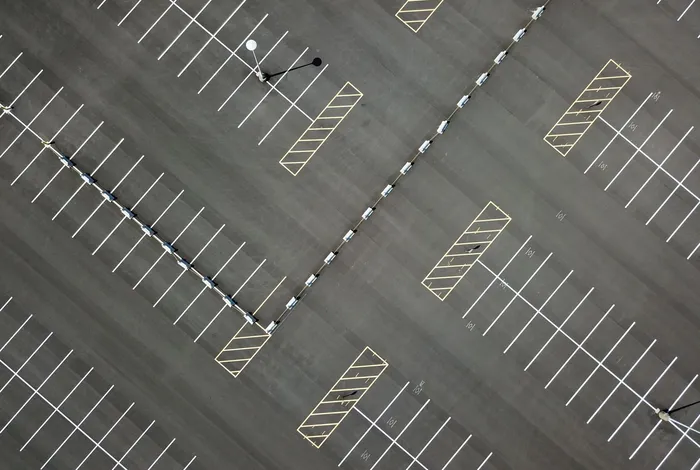
Parking Space Dimensions: Bay Sizes Under Turkey's Car Park Regulation
Turkey's Car Park Regulation sets a minimum of 2.40×4.90 metres for a car parking space and a minimum width of 3.50 metres for an accessible bay. Line layouts are planned with these sizes and the aisle.
Read article ›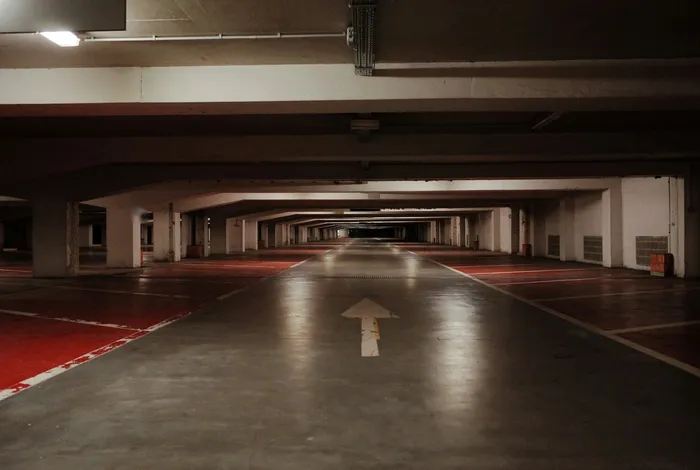
Car Park Floor Coatings: Protection Against Salty Water and Slush in Winter
In winter, cars bring snow, slush and road de-icing salt into car parks. This salty water can penetrate concrete and reach the rebar; the right coating, falls and maintenance protect the deck.
Read article ›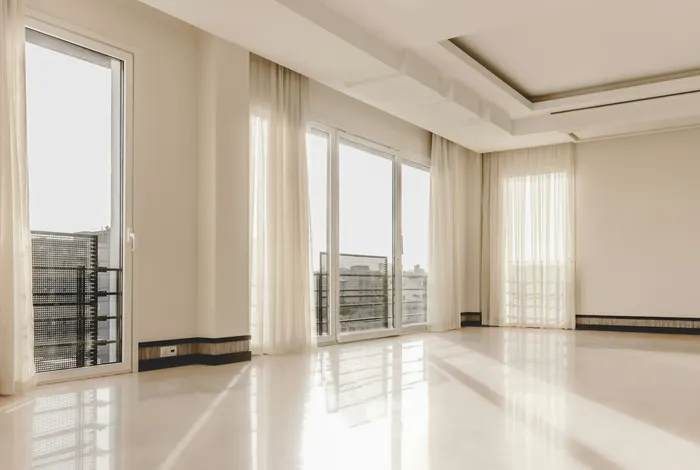
Is Epoxy Flooring Suitable for Homes? Living Room, Kitchen and Bathroom
Epoxy can be used at home too, but a house brings different expectations from a factory. The substrate, grip in wet rooms and sunny windows decide the right choice.
Read article ›