

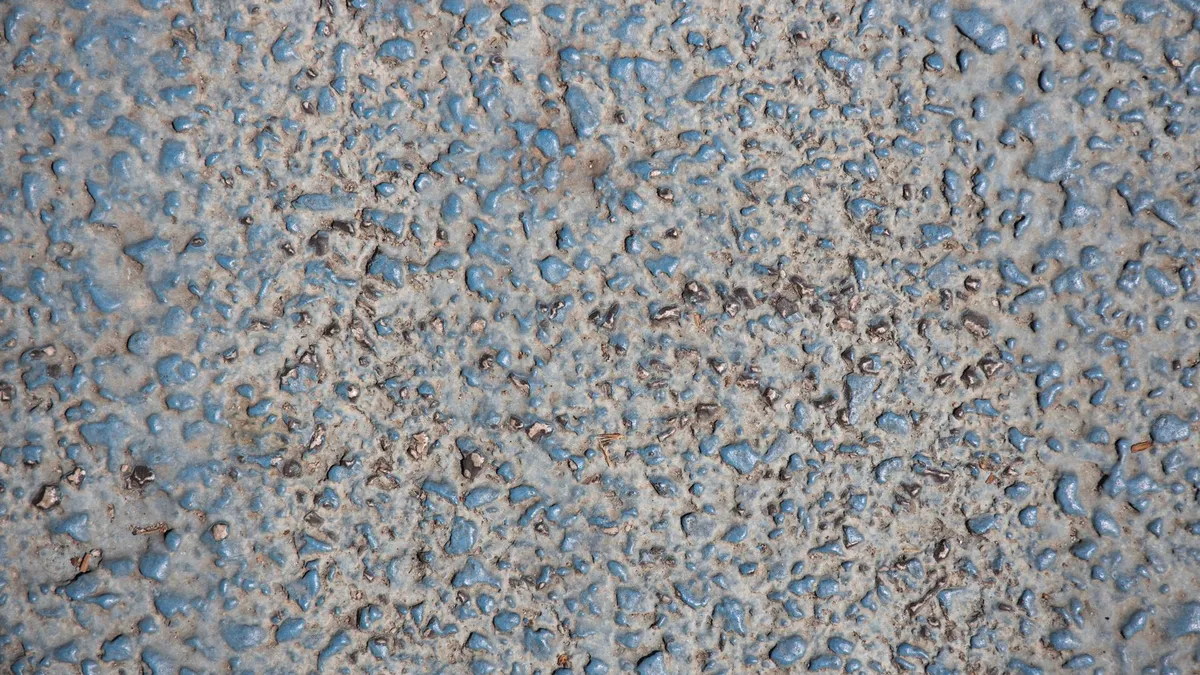
More texture is not always better: too much makes cleaning harder. The right level depends on how wet and oily the area is.
How grip is achieved
On epoxy floors, slip resistance comes from quartz sand or similar aggregates mixed in or broadcast onto the surface. Grain size and quantity set the texture level. The aggregate is bound to the surface by being wrapped in resin, so the final texture also depends on how much material goes on top of it.
The layers of a broadcast system
The Sikafloor MultiDur EB-24 system data sheet gives a typical build-up: a primer; a wearing coat filled 1:1 with fine quartz sand; quartz sand of about 0.4–0.7 mm broadcast in excess onto this coat (about 4–6 kg/m²); and 1–2 top coats. The total thickness is about 2–4 mm (epoxy multilayer system).
Grain size and rating
The same data sheet links the slip rating to the sand used: R11 V4 with sand of about 0.3–0.8 mm and R12 V6 with 0.7–1.2 mm. In other words, a coarser grain means a higher class and a larger displacement volume. We explain what the R and V values mean, and which is recommended for which area, in slip resistance ratings.
The effect of the top coat
The top coat applied over the broadcast sand fills the gaps between the grains and wraps their peaks; how many coats are applied, and how much, determines the final texture. The data sheet gives 1–2 top coats at about 0.6–0.8 kg/m². The amount used on the sample is kept the same on site and checked during application.
Needs by area
Dry warehouses and corridors may need only a light texture. Wet production areas, oily workshops, ramps and cold stores need a more pronounced one. We cover the issues specific to these areas in our articles on commercial kitchens, car park ramps, cold storage and auto service and car wash areas.
The type of contaminant
What makes a floor slippery changes the texture it needs. According to the UK Health and Safety Executive's (HSE) technical information sheet on floor slip resistance, a higher level of surface roughness is generally needed to maintain slip resistance where the contaminant is thicker than water. Areas with oil and food waste therefore get a more pronounced texture.
Measuring on site: the pendulum test
HSE has adopted the pendulum test as its standard method for assessing floor slipperiness in both dry and contaminated conditions (BS 7976). The result is read as a pendulum test value (PTV): 0–24 high, 25–35 moderate and 36 and above low slip potential. The test should be carried out by a trained person, and profiled floors may need tests in several directions.
Measuring surface roughness
The same sheet notes that the Rz roughness value, measured with a hand-held meter, is a good indicator of slip resistance in water-wet pedestrian areas: below 10 µm high, 10–20 µm moderate and above 20 µm low slip potential. The measurement can also be used to monitor wear over time, although these meters are unsuitable for very rough floors.
Testing for barefoot areas
According to HSE, Slider 96 rubber on the pendulum gives enough information for shod pedestrians, while Slider 55 rubber is used for barefoot areas, and on profiled floors both can be helpful. The details for areas such as pool surrounds are in pool deck surfaces.
Balancing cleaning
More texture holds more dirt. Especially where hygiene matters, grip and cleanability must be considered together, and the cleaning method and equipment are chosen to suit the texture (food plant flooring).
A mixed approach
Different zones in one facility can have different textures: walkways and wet areas rougher, dry areas smoother.
Walking and cleaning trial on a sample
Walking on and cleaning a small sample area before choosing gives a better idea than a description on paper. If the sample is kept together with a note of the sand and top coat used, the same texture can be reproduced in later repairs.
Frequently Asked Questions
How is anti-slip epoxy made?
Aggregates such as quartz sand are broadcast in excess onto the wearing coat and sealed with a top coat; grain size and the amount of top coat set the texture.
Is rougher always better?
No; too much texture makes cleaning harder, so choose according to how wet and oily the area is.
Can one facility have different textures?
Yes; wet and sloping areas can be rougher and dry areas smoother.
How is slip resistance measured on site?
With the pendulum test; in the classification HSE uses, a pendulum test value (PTV) of 36 or more indicates low slip potential. In water-wet areas, Rz roughness readings provide additional information.
Would you like a site survey for your floor? HBK Epoxy Flooring, based in Gaziantep, offers free surveys and quotations in the surrounding provinces.
0507 597 9537 WhatsAppRelated articles
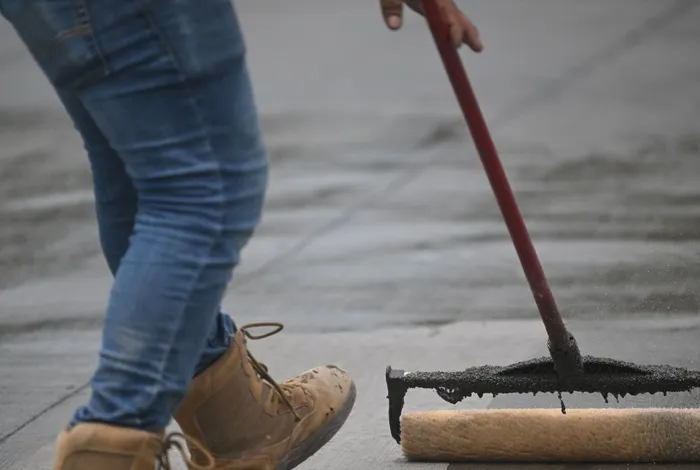
What Is an Epoxy Primer? Why It Is Used and How It Is Applied
The primer is the first coat that bonds an epoxy coating to concrete. It seals the pores, binds fine surface dust and helps the following coats sit on a sound base.
Read article ›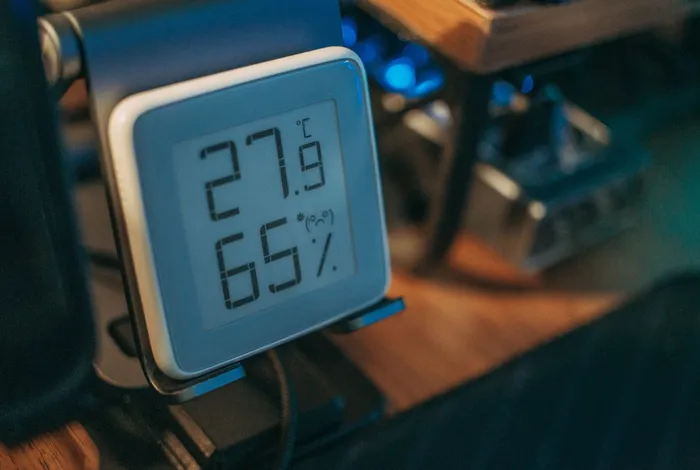
How to Calculate the Dew Point: The 3 °C Rule for Floor Coatings
If the floor temperature approaches the dew point, an invisible film of water forms on the new coating. Measuring temperature and humidity tells you the risk in minutes.
Read article ›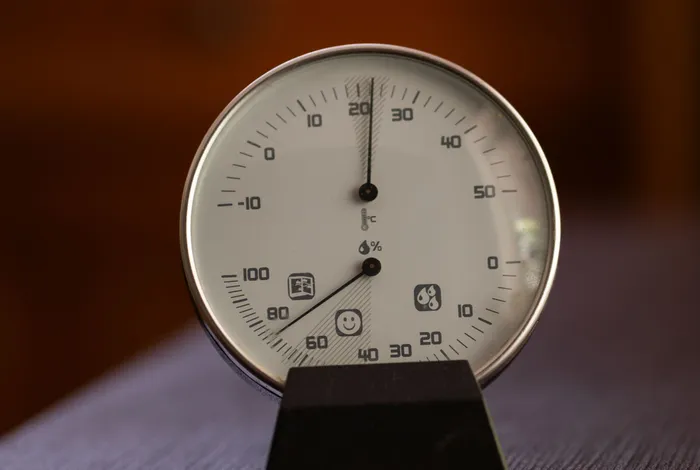
Concrete Moisture Testing: Why and How Before Coating
Concrete can look dry yet hold moisture inside. Under a coating this moisture creates vapour pressure; work started without testing may later blister.
Read article ›