

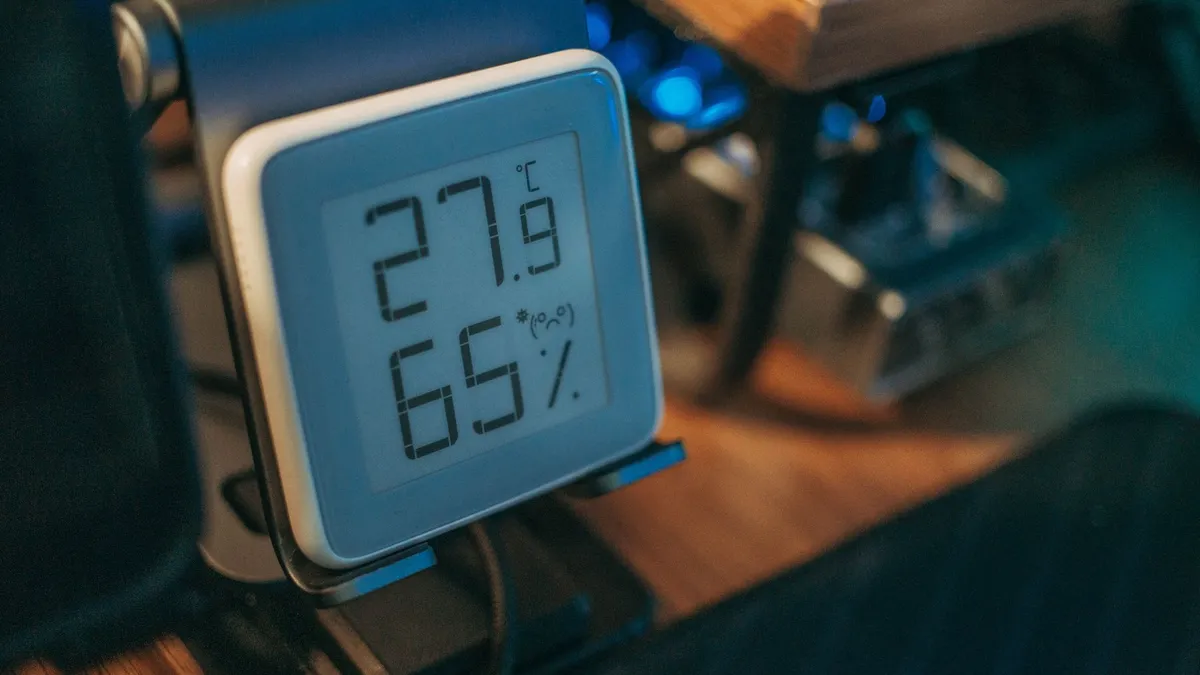
If the floor temperature approaches the dew point, an invisible film of water forms on the new coating. Measuring temperature and humidity tells you the risk in minutes.
What is the dew point?
The dew point is the temperature at which water vapour in the air starts to condense. The colder the air, the less moisture it can hold; if a surface cools to the dew point or below, a thin film of water forms on it. The film is often invisible, yet it is enough to spoil the cure of a freshly applied coating.
Why it matters for floor coatings
If epoxy or polyurethane coatings come into contact with moisture while curing, the surface may show whitening and loss of gloss (blooming), tackiness and poor adhesion between coats. That is why manufacturers set a clear limit in their data sheets. The Sikafloor-264 data sheet, for example, states that the substrate and the uncured floor must be at least 3 °C above the dew point; the same sheet gives a maximum relative humidity of 80% and an air and substrate temperature of +10 to +30 °C. It also notes that low temperatures and high humidity increase the probability of blooming.
The risk grows in autumn and winter. In unheated warehouses, basements and car parks the concrete floor stays colder than air that warms up during the day; when warm, humid air meets the cold floor, condensation begins. Even if the air seems dry, no decision should be made without measuring the floor temperature.
The calculation: the Magnus formula
The dew point is calculated from the air temperature (T, °C) and the relative humidity (RH, %). With the constants a = 17.62 and b = 243.12 °C of the Magnus approximation widely used in meteorology:
γ = ln(RH / 100) + (a × T) / (b + T)
Dew point Td = (b × γ) / (a − γ)
Example (15 °C, 70% RH): γ = ln(0.70) + (17.62 × 15) / (243.12 + 15) = −0.357 + 1.024 = 0.667
Td = (243.12 × 0.667) / (17.62 − 0.667) ≈ 9.6 °C
So at 15 °C and 70% RH the dew point is about 9.6 °C, and the floor surface must be at least 9.6 + 3 = 12.6 °C. If the floor measures 11 °C, work does not start, however dry the air may feel.
Quick reference table
The dew points below were calculated with the same formula (°C). The floor temperature must be at least 3 °C above the value in the table.
| Air temperature | 50% RH | 60% RH | 70% RH | 80% RH | 90% RH |
|---|---|---|---|---|---|
| 5 °C | −4.6 | −2.1 | 0.0 | 1.8 | 3.5 |
| 10 °C | 0.0 | 2.6 | 4.8 | 6.7 | 8.4 |
| 15 °C | 4.7 | 7.3 | 9.6 | 11.6 | 13.4 |
| 20 °C | 9.3 | 12.0 | 14.4 | 16.4 | 18.3 |
| 25 °C | 13.9 | 16.7 | 19.1 | 21.3 | 23.2 |
The table shows two things: as humidity rises, the dew point moves closer to the air temperature and the safe margin narrows. At 90% RH the dew point is only about 1.5–1.8 °C below the air temperature, so if the floor is slightly colder than the air, condensation is unavoidable. Above 80% RH the upper limit in the example data sheet has already been exceeded anyway.
Measuring on site, step by step
- Measure the air temperature and relative humidity close to floor level with a thermo-hygrometer.
- Measure the floor surface temperature at several points with a contact or infrared thermometer; the foot of external walls, door thresholds and shaded areas are usually the coldest spots.
- Calculate the dew point and compare it with the lowest floor temperature; if the difference is less than 3 °C, do not start.
- Repeat the measurement during the work and into the evening; once the sun goes down the margin can close quickly. Keep a record of the readings.
ISO 8502-4, the standard for painting steel surfaces, follows the same logic: air temperature and relative humidity are measured, the dew point is derived and compared with the surface temperature.
What if the margin is not enough?
- Heat the space. Gas heaters that exhaust indoors release water vapour and carbon dioxide into the room, so heaters that vent outside, or electric heaters, are preferred.
- Lower the relative humidity with a dehumidifier, and keep doors and shutters closed to stop cold, humid air coming in.
- Move the work to the warmer hours of the day, and keep the conditions right not only during application but throughout the cure.
We explain the effect of temperature on cure and pot life in temperature and humidity when applying epoxy, and the causes of differences in shade and gloss in colour variation and uneven sheen on epoxy floors.
Dew point and concrete moisture are not the same
The dew point concerns moisture in the air condensing on a surface. Concrete moisture is moisture rising from within the concrete towards the surface, and it is measured by a different method; see concrete moisture testing for details. Both are separate conditions to check before coating; for the full list, see our preparation checklist before epoxy.
Frequently Asked Questions
How is the dew point calculated?
Measure the air temperature and relative humidity, then apply the Magnus formula. For example, at 15 °C and 70% RH the dew point is about 9.6 °C.
How far above the dew point must the floor be?
Widely used product data sheets require the substrate and the uncured coating to be at least 3 °C above the dew point.
What happens if condensation forms during coating?
The surface may show whitening and loss of gloss, tackiness and poor adhesion of the next coat.
Are the dew point and concrete moisture the same thing?
No. The dew point concerns moisture in the air condensing on the surface; concrete moisture comes from inside the concrete. They are measured separately.
Would you like a site survey for your floor? HBK Epoxy Flooring, based in Gaziantep, offers free surveys and quotations in the surrounding provinces.
0507 597 9537 WhatsAppRelated articles
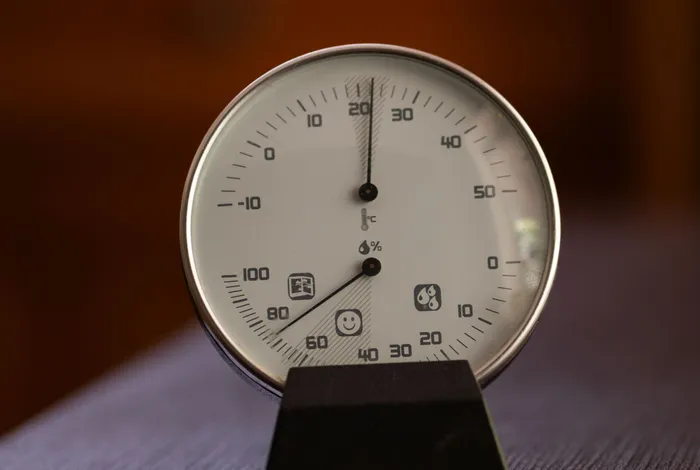
Concrete Moisture Testing: Why and How Before Coating
Concrete can look dry yet hold moisture inside. Under a coating this moisture creates vapour pressure; work started without testing may later blister.
Read article ›
Stains and Scratches on Epoxy Floors: Prevention, Cleaning and Renewal
Epoxy is tough but not scratch-proof. Most stains come out with correct cleaning; deep scratches are removed with a topcoat renewal without removing the floor.
Read article ›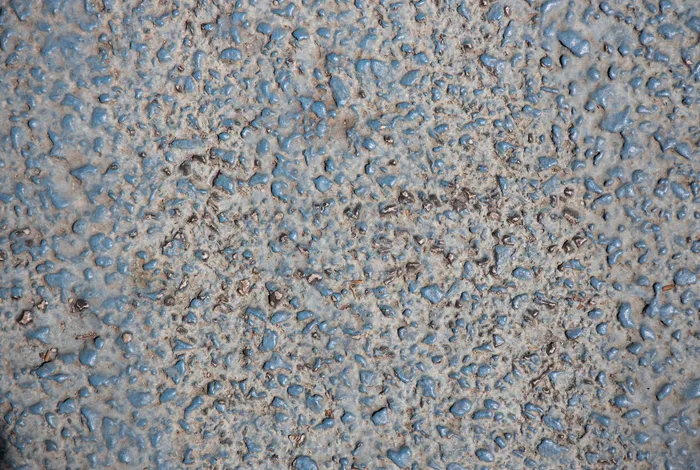
Anti-Slip Epoxy: How to Choose the Right Texture
More texture is not always better: too much makes cleaning harder. The right level depends on how wet and oily the area is.
Read article ›