

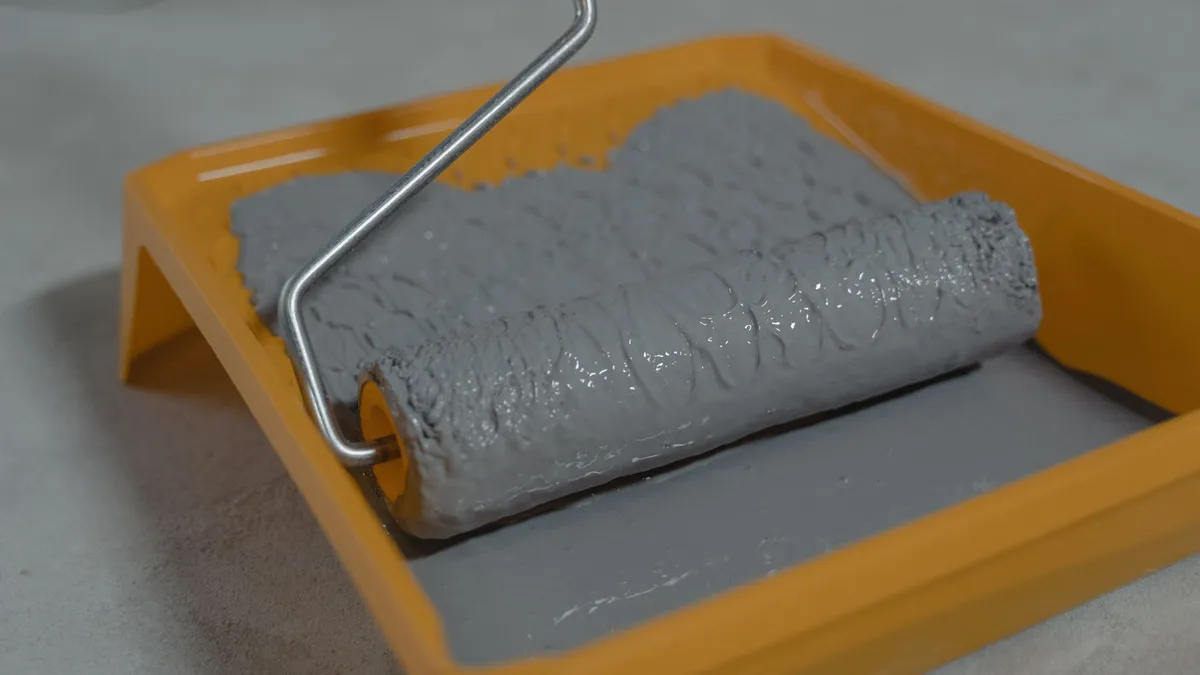
How far epoxy goes depends not on the weight of the kit but on the thickness of the layer and the density of the product; the calculation takes minutes.
The short answer: it depends on the layer and its thickness
There is no single answer to “how many square metres does 20 kg of epoxy cover?”. The same 20 kg kit can cover dozens of square metres as a thin roller coat, yet only a few square metres as a 2 mm self-levelling layer. Before calculating anything, decide which layer you are calculating: the primer, a roller-applied coat, a self-levelling layer or a mortar.
Read the weight on the pack carefully as well. On some products the stated weight is the total of the resin (A) and the hardener (B); on others it refers to component A only. Check the total kit weight on the label or in the technical data sheet before you start.
The formula: thickness × density
One millimetre of thickness over one square metre equals one litre of volume. So the consumption per square metre of an unfilled (neat) resin is:
Consumption (kg/m²) = layer thickness (mm) × mixed density (kg/L)
Area covered (m²) = quantity of material (kg) ÷ consumption (kg/m²)
For example, the data sheet for Sikafloor-264 gives a mixed density of about 1.43 kg/L, so a 1 mm layer of this resin weighs about 1.43 kg/m². In mortars and self-levelling systems filled with quartz sand the density of the mix changes; for these systems use the “kg/m² per mm” figure from the data sheet directly.
Example values from data sheets
The table below shows how many square metres 20 kg covers in theory, based on the consumption figures in the manufacturer data sheets of two widely used products.
| Layer | Data-sheet consumption | Theoretical area with 20 kg |
|---|---|---|
| Primer (Sikafloor-161) | 0.35–0.55 kg/m² per coat | About 36–57 m² per coat |
| Roller coat (Sikafloor-264) | About 0.25–0.30 kg/m² per coat | About 67–80 m² per coat |
| Self-smoothing intermediate layer, 1:1 with quartz sand (Sikafloor-161) | About 1.9 kg/m² per 1 mm (resin + sand) | 3.8 kg/m² of mix at 2 mm; about 10.5 m² with 20 kg resin + 20 kg sand |
Source: Sika product data sheets — Sikafloor-161 (August 2020, version 05.02) and Sikafloor-264 (April 2023, version 08.05). Values differ between brands and products; always check the current data sheet of the product you will use.
Why the data-sheet figure is “theoretical”
The consumption in a data sheet refers to a flat, non-porous surface. Data sheets state clearly that it does not include extra material for porosity, surface profile, level differences or wastage. On site, the main factors that widen the gap are:
- Absorbent or dusting old concrete soaks up more primer; sometimes a second primer coat is needed.
- A rough profile after grinding or scarifying needs more material than a smooth surface.
- Hollows and level differences locally increase the thickness of a self-levelling layer.
- Material left in the bucket and on rollers and trowels, and mix that cannot be spread within its pot life, becomes waste.
That is why the allowance is set according to the condition of the floor, not by guesswork: the absorbency and levels are assessed during the site survey and, if needed, a small trial area is laid. We cover the jobs to be done beforehand in the preparation checklist before epoxy, and why rising moisture is measured separately in our article on concrete moisture testing.
Worked example: a 120 m² warehouse floor
Suppose a 120 m² warehouse receives a primer and two roller coats. With the data-sheet values in the table:
- Primer: 120 × 0.35–0.55 = 42–66 kg
- Roller coats: 2 coats × 120 × 0.25–0.30 = 60–72 kg
- Total theoretical need: 102–138 kg, plus an allowance that depends on the floor.
If forklift traffic calls for a 2 mm self-levelling intermediate layer on the same area, that layer alone needs 120 × 3.8 = 456 kg of resin–sand mix. As you can see, the choice of system multiplies the quantity of material.
Mixing ratio and pot life
Two-component epoxy is mixed at a fixed ratio of A to B by weight; for Sikafloor-264 the ratio is 79:21 by weight. If a kit has to be split, keep the ratio by weighing; mixing by eye spoils the cure and can leave tacky patches.
Pot life is also part of the calculation. The same data sheet gives a pot life of about 50 minutes at +10 °C, about 25 minutes at +20 °C and about 15 minutes at +30 °C. Material that cannot be spread in that time hardens in the bucket and is wasted, so on large areas the kit size and crew size are planned around it.
The system you choose sets the consumption
Where there is only light foot traffic and the aim is a dust-free surface, a thin epoxy coating system may be enough. Areas with forklift and pallet traffic call for an epoxy self-levelling system or a mortar system, and consumption rises with thickness. That is why, when comparing quotations, you should ask in writing for the number of coats, the thickness of each coat and the material per square metre. We have gathered the other questions on this topic in 10 questions to ask before accepting a flooring quote.
Frequently Asked Questions
How many m² does 20 kg of epoxy cover?
It depends on the thickness. With example data-sheet values, 20 kg covers about 67–80 m² as a roller coat using 0.25–0.30 kg/m², but only about 10.5 m², together with 20 kg of sand, as a 2 mm quartz-filled self-levelling layer.
How do you calculate epoxy consumption?
For neat resin, consumption (kg/m²) = thickness (mm) × density (kg/L); area covered = material (kg) ÷ consumption. For sand-filled systems use the data sheet's kg/m² per mm figure.
How much epoxy primer is needed per m²?
The data sheet of an example solvent-free epoxy primer gives 0.35–0.55 kg/m² per coat; absorbent or dusting concrete may need a second coat.
Why add an allowance to the data-sheet figure?
The data-sheet value is for a flat, non-porous surface; porosity, surface profile, level differences and wastage are not included.
Would you like a site survey for your floor? HBK Epoxy Flooring, based in Gaziantep, offers free surveys and quotations in the surrounding provinces.
0507 597 9537 WhatsAppRelated articles
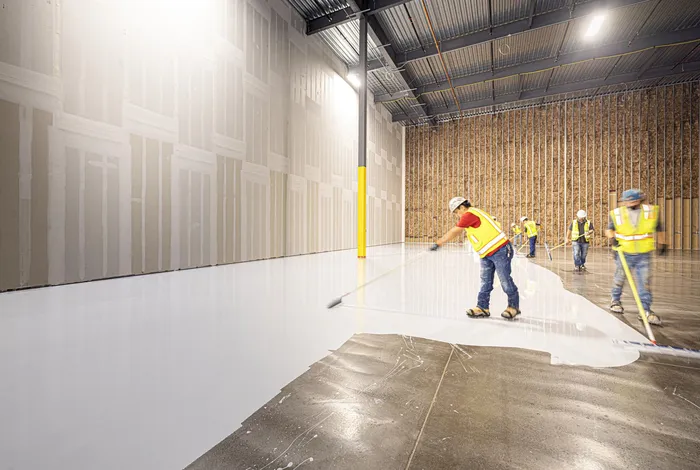
Flooring Without Stopping Production: Planning a Phased Installation
Renewing a factory floor does not have to halt production for weeks. Dividing the area into phases and choosing fast-curing systems lets the work finish while operations continue.
Read article ›
10 Questions to Ask Before Accepting a Flooring Quote
Two quotes for the same square metres can differ widely, often because they do not describe the same job. The right questions make quotes truly comparable.
Read article ›
What a Flooring Warranty Covers and What It Does Not
Warranty scope matters as much as its length. A workmanship defect and damage from misuse are different things; separating them in writing from the start protects both sides.
Read article ›