

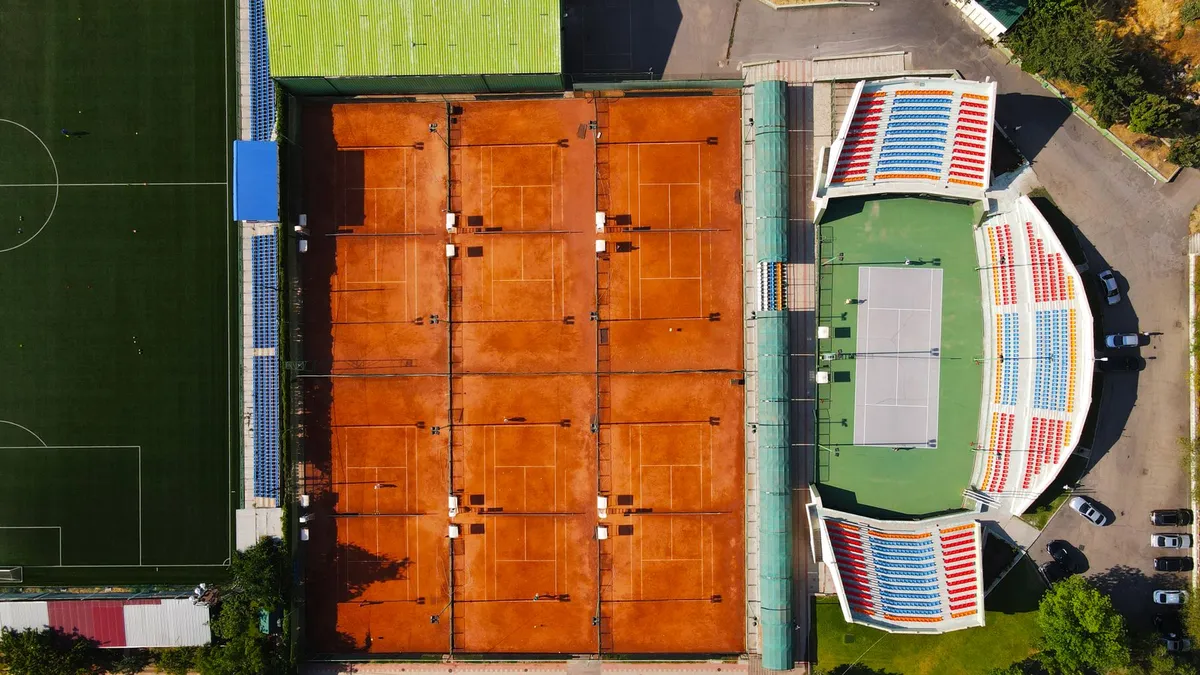
How fast and how high the ball bounces depends on the surface. The ITF classifies courts by construction type and by pace; the right choice depends on upkeep and climate as much as on play.
The surface changes the game
How fast and how high a tennis ball bounces off the court depends on the type and texture of the surface. The difference is plain at the major tournaments: the Australian Open and the US Open are played on hard courts, Roland-Garros on clay and Wimbledon on grass. When choosing a surface for a club, school or residential court, however, upkeep, climate and how many months a year the court will be used matter as much as the character of play.
Surface types according to the ITF
The International Tennis Federation (ITF) classifies court surfaces by construction type: acrylic/polyurethane coatings (hard courts), clay, artificial clay, artificial grass, natural grass, carpet, asphalt, concrete and hybrid clay, among others. These classes describe how a surface is built, not how fast it plays. A separate classification is used for pace.
ITF pace categories (Court Pace Rating)
The ITF measures the pace of a surface with its Court Pace Rating (CPR): a ball is fired at the surface and its speed before and after the bounce is recorded. The value reflects both the friction of the surface and the bounce of the ball; a higher bounce gives the player more time, so it counts as slower.
| Category | CPR value | Pace |
|---|---|---|
| 1 | 29 or below | Slow |
| 2 | 30–34 | Medium-slow |
| 3 | 35–39 | Medium |
| 4 | 40–44 | Medium-fast |
| 5 | 45 or above | Fast |
The category is the value of the surface product in the classification test. The pace of an actual court can change over time with use, wear and maintenance.
Clay courts
A clay court is made of an unbound mineral material such as crushed brick. It plays slow with a high bounce, allows sliding and is relatively gentle on the joints. In return it needs constant care: watering, brushing, sweeping the lines and rolling must be done regularly. It takes time to dry after rain, it is closed to play during freeze–thaw periods, and the surface has to be prepared again after winter.
Hard courts: the acrylic system
On a hard court, acrylic coating is built up in layers over an asphalt or concrete base. The impermeable surface dries quickly after rain, needs little maintenance and comes in a wide range of colours. The pace is adjusted through the amount and grading of silica sand in the colour coats; manufacturers have their systems classified by the ITF and state the category. Cushion layers added underneath reduce the load on the joints.
We describe the layers of an acrylic court on our how many coats an acrylic court needs page, and the options on our acrylic tennis court page. On outdoor courts, falls and drainage that stop water from ponding have a direct effect on the life of the surface (falls and drainage on outdoor courts).
Grass and artificial grass
Natural grass plays fast with a low bounce, but its maintenance and climate requirements are very high and it is rare at clubs. Sand-filled artificial grass gives a softer game and drains well; the infill sand has to be spread regularly and fibre wear monitored.
Which surface for whom?
| Criterion | Clay | Acrylic hard court | Artificial grass |
|---|---|---|---|
| Maintenance | High, continuous | Low | Medium |
| Back in play after rain | Slow | Fast | Medium |
| Pace | Slow | Adjusted with sand texture | Slow to medium |
| Winter use | Closed during frost | Usable in dry weather | Usable in dry weather |
For schools, residential complexes and municipal courts, low maintenance and long service life come first, so acrylic hard courts are often chosen; a medium or medium-slow pace category suits players of different levels. Clubs with a maintenance team may prefer clay for training. You will find other sports surfaces on our types of sports flooring page, and how an old court is renewed in resurfacing an old tennis court.
A short note before winter
On outdoor courts, clearing leaves and mud before winter, keeping drain inlets open and noting cracks for spring repair protect the surface. For the care of an acrylic court, see our acrylic court maintenance page.
Frequently Asked Questions
What types of tennis court surface are there?
The ITF classification includes acrylic/polyurethane hard courts, clay, artificial clay, natural and artificial grass, carpet, asphalt, concrete and hybrid clay, among others.
What are the ITF pace categories?
There are five categories based on the Court Pace Rating: 1 slow (29 or below), 2 medium-slow (30–34), 3 medium (35–39), 4 medium-fast (40–44) and 5 fast (45 or above).
Can the pace of an acrylic court be adjusted?
Yes. The amount and grading of sand in the colour coats change the texture of the surface and therefore its pace. The category is stated in the system's ITF classification.
Clay or acrylic court?
Clay plays slow and is relatively gentle on the joints but needs constant care; an acrylic hard court can be used for longer with little maintenance.
Would you like a site survey for your floor? HBK Epoxy Flooring, based in Gaziantep, offers free surveys and quotations in the surrounding provinces.
0507 597 9537 WhatsAppRelated articles
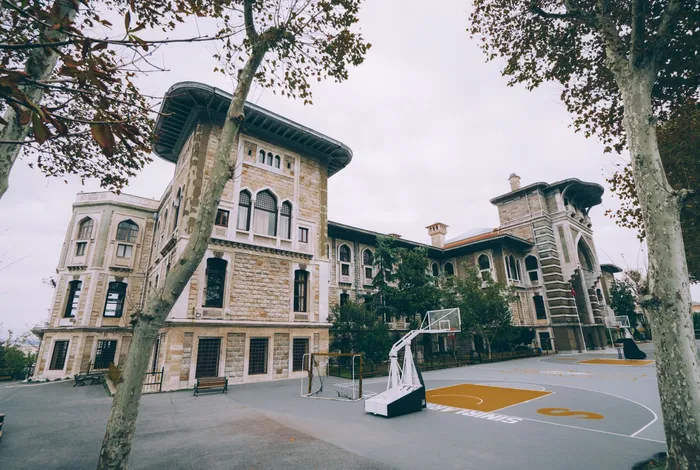
School Playground Courts: Safe, Long-Lasting Surfaces
A school court serves hundreds of children at break time as well as PE lessons. The surface must give grip, clean easily and be renewable during the summer holiday.
Read article ›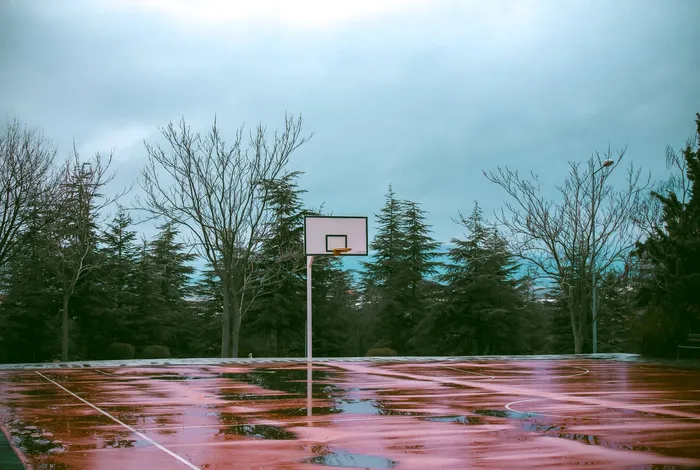
Falls and Drainage on Outdoor Courts: No More Puddles
Water standing on an outdoor court stops play and shortens the acrylic surface's life. The fix is not in the coating but in the falls and drainage beneath.
Read article ›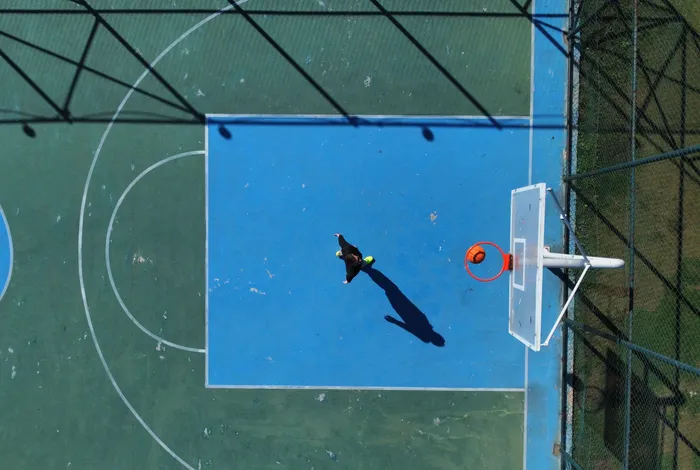
Basketball Court Dimensions: Planning Full Courts and Small Spaces
An official basketball playing area is 28×15 metres, plus a safety margin around it. Where space is tighter, a half court or scaled layout can be planned.
Read article ›