

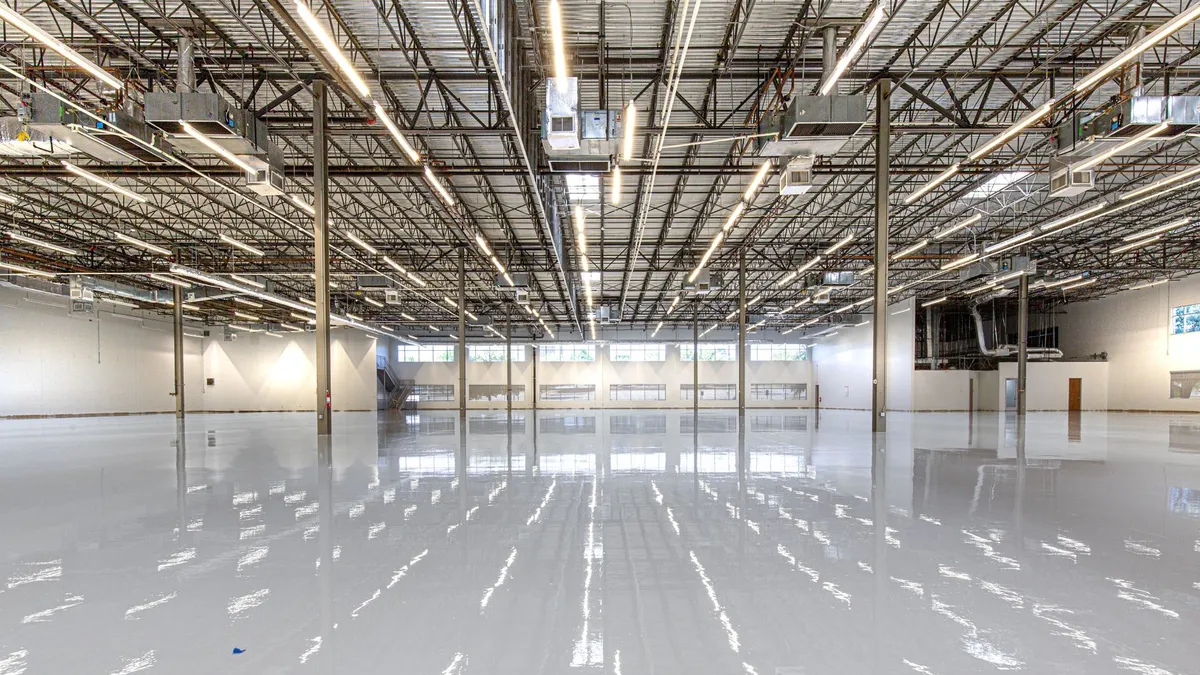
Even with the same colour code, an epoxy floor can show shade and gloss differences. The cause is usually batch, thickness or an interrupted application.
Shade differences
Products from different production batches can vary slightly in shade. Reserving enough material from one batch for large areas reduces this risk.
Thickness differences
Especially with light colours, thin areas can show the colour of the primer or concrete beneath. Consistent thickness means consistent colour.
Visible joins
If application stops mid-area and resumes later, the join line may show. Sections should end at walls, joints or door lines.
Uneven sheen
Differences in temperature and humidity, or application at different times of day, can cause patchy gloss.
The effect of light
In long corridors facing windows, low-angle light highlights even small undulations; floor levelness matters even more there.
Frequently Asked Questions
Why does the same colour look different?
Because of different batches, thickness or an interrupted application.
How are visible joins prevented?
By ending sections at walls, joints or door lines.
Can colour differences be fixed later?
Yes, by preparing the surface and applying a new topcoat.
Would you like a site survey for your floor? HBK Epoxy Flooring, based in Gaziantep, offers free surveys and quotations in the surrounding provinces.
0507 597 9537 WhatsAppRelated articles
Concrete Moisture Testing: Why and How Before Coating
Concrete can look dry yet hold moisture inside. Under a coating this moisture creates vapour pressure; work started without testing may later blister.
Read article ›
Stains and Scratches on Epoxy Floors: Prevention, Cleaning and Renewal
Epoxy is tough but not scratch-proof. Most stains come out with correct cleaning; deep scratches are removed with a topcoat renewal without removing the floor.
Read article ›
Anti-Slip Epoxy: How to Choose the Right Texture
More texture is not always better: too much makes cleaning harder. The right level depends on how wet and oily the area is.
Read article ›