

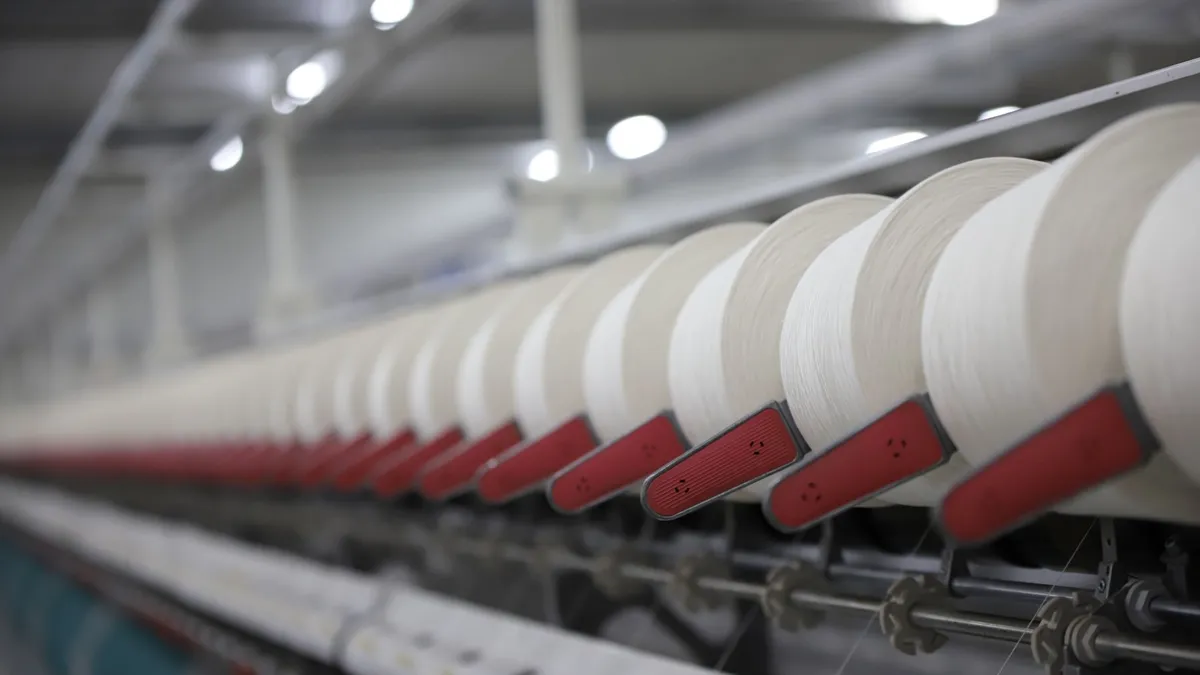
In a textile factory the floor must not hold dust and fibres, must sweep easily, withstand forklifts and make the space look brighter.
Dust and fibre
Weaving and garment production constantly fill the air and floor with fibres and dust. Bare concrete produces dust of its own, which settles on machines, yarn and fabric. In regions with a strong textile and carpet industry, such as Gaziantep, this is the problem we meet most often on factory floors (epoxy flooring in Gaziantep). Dusting concrete is not only a cleaning burden; it also affects product quality, machine service intervals and the air in the workplace.
A sealed, even surface
Sealed coatings such as epoxy stop concrete dusting and let fibres be swept up easily. A smooth surface shortens cleaning time. In production halls with light traffic an epoxy coating system is often enough; for a flatter, seamless and thicker surface a self-levelling system is preferred. In stores and circulation areas where no coating is wanted, a concrete surface hardener is another way to reduce dusting.
Forklifts and pallet trucks
Forklifts and pallet trucks carrying bobbins, fabric rolls and boxes wear the floor continuously. Choose a system thick enough for the traffic. The narrow, hard wheels of pallet trucks concentrate the load on a small area, and joint edges and cracks break under them. That is why joints are repaired before coating and thicker, wear-resistant multilayer or mortar systems are used on busy routes.
Machine oil and vibration
Oil drips around looms are normal. A surface that does not absorb oil prevents staining and slips. The constant vibration of the machines stresses the coating under their feet and at anchor points; load-spreading plates under the feet and sealing the edges of anchor holes with resin extend the life of these areas. We explain the details in protecting epoxy floors during heavy machinery installation.
Humidity and static
Spinning and weaving halls are often kept at controlled humidity. During coating work this humidity must stay within the limits given in data sheets; the Sikafloor-264 data sheet, for example, allows a maximum relative humidity of 80% and requires the substrate to be at least 3 °C above the dew point. The humidification system should be adjusted or switched off while the work is in progress. Where synthetic fibres are processed and electronically controlled machines are concentrated, and static electricity is a concern, an antistatic (ESD) floor can be considered separately.
Brightness and lines
A light-coloured floor reflects light and brightens the space; walkways and machine areas marked with lines keep things orderly. You will find how colour choice affects brightness and the visibility of dirt in choosing colours for industrial floors, and lane marking on our forklift aisle marking page.
Coating without stopping production
Most textile factories run in shifts and cannot stop for long. The floor is divided into sections, the machines and stock in each section are cleared in turn, and the coating is timed to coincide with weekend or holiday shutdowns. Solvent-free systems affect neighbouring sections less in terms of odour. We explain how the plan is made in phased installation.
Installation steps
- Survey and zoning: machine positions, pallet-truck routes and points where oil and water reach the floor are marked on the plan.
- Concrete check: moisture is measured and the dusting, weak top layer is identified (concrete moisture testing).
- Surface preparation: laitance is removed by grinding or shot blasting; joints and cracks are repaired.
- Primer and body coat: applied at a thickness chosen for the traffic in each section.
- Lines and handover: walkway and machine-area lines are marked; machines and stock are moved back after the curing time given in the data sheet.
Common mistakes
- Covering dusting concrete with paint alone and skipping surface preparation.
- Coating pallet-truck routes without repairing the joints.
- Applying while the humidifiers are running.
- Applying one thickness across the whole hall without treating busy routes separately.
Frequently Asked Questions
Why does a textile factory floor dust?
Bare concrete wears into dust; a sealed coating stops this. In areas where no coating is wanted, a surface hardener also reduces dusting.
Do fibres stick to the coating?
On a smooth, sealed surface fibres sweep up easily.
Can we coat while the factory runs?
Work can be phased by section so production continues: machines and stock are cleared in turn and the work is timed for shutdown days.
Can epoxy be applied in a humidified hall?
Yes, but humidification should be adjusted or switched off during the work, relative humidity kept below the data sheet limit (for example 80%) and the substrate at least 3 °C above the dew point.
Would you like a site survey for your floor? HBK Epoxy Flooring, based in Gaziantep, offers free surveys and quotations in the surrounding provinces.
0507 597 9537 WhatsAppRelated articles

Parking Space Dimensions: Bay Sizes Under Turkey's Car Park Regulation
Turkey's Car Park Regulation sets a minimum of 2.40×4.90 metres for a car parking space and a minimum width of 3.50 metres for an accessible bay. Line layouts are planned with these sizes and the aisle.
Read article ›
Car Park Floor Coatings: Protection Against Salty Water and Slush in Winter
In winter, cars bring snow, slush and road de-icing salt into car parks. This salty water can penetrate concrete and reach the rebar; the right coating, falls and maintenance protect the deck.
Read article ›
Is Epoxy Flooring Suitable for Homes? Living Room, Kitchen and Bathroom
Epoxy can be used at home too, but a house brings different expectations from a factory. The substrate, grip in wet rooms and sunny windows decide the right choice.
Read article ›