


Concrete is a load-bearing building material; screed is a layer that levels the surface that will receive a floor finish. Their mixes, their roles and the checks needed before coating are different.
The short answer
Concrete is a mix of cement, water, sand and coarse aggregate (gravel or crushed stone) and is used in load-bearing parts such as slabs, foundations and ground-bearing floors. Screed is a mortar of cement or another binder with fine aggregate (sand); it contains no coarse aggregate. Its job is not to carry loads but to level the top of the slab below, take up differences in level, provide falls where needed and prepare a smooth surface for timber, tiles or epoxy.
| Property | Concrete | Screed |
|---|---|---|
| Mix | Cement, water, sand and coarse aggregate | Binder (usually cement), sand and water; no coarse aggregate |
| Role | Carries loads; it is the slab or floor itself | Carries no loads; levels and sets heights and falls |
| Standard | EN 206 | EN 13813 |
| Example class | C25/30 | CT-C25-F4 |
Why the mix matters
The coarse aggregate in concrete acts as a skeleton; much of its strength and volume stability comes from this granular structure. Screed contains only fine material, so its surface is easier to level and it can be laid in thinner layers. On the other hand, screed is not designed to carry loads like concrete; its thickness and strength are chosen for the floor finish that will go on top and for the loads in use.
The two materials also follow different standards (adopted in Turkey as TS EN 206 and TS EN 13813). Concrete is specified under EN 206 by its compressive strength class. Screed materials are first identified under EN 13813 by binder type: CT is cementitious, CA calcium sulphate, MA magnesite, AS mastic asphalt and SR synthetic resin screed. Compressive (C) and flexural (F) strength classes are then added; "CT-C25-F4", for example, is a cementitious screed with compressive strength class C25 and flexural strength class F4.
Types of screed
Screeds are also classified by how they relate to the slab below. A bonded screed adheres directly to the slab. A screed on a separating layer is separated from the slab by a sheet or membrane. A floating screed is laid on thermal or acoustic insulation boards and does not touch the slab at all. The required thickness is set in the design according to the type, the loads in use and whether underfloor heating pipes run through the screed; there is no single "correct thickness".
What is a "power-floated screed"?
What Turkish sites call a "helicopter screed" is often not a separate screed layer at all. In warehouses and factories, the surface of the freshly poured floor concrete is finished with a power float (the "helicopter") while the concrete is still plastic, and a dry-shake hardener is often broadcast at the same time. In other words, the concrete and its wearing surface are formed in one operation. We describe this method on our power-floated screed page and dry-shake hardeners in our article on concrete surface hardeners. For the floor concrete itself, see our industrial concrete slab page.
Is screed the same as levelling concrete?
No. Levelling concrete contains coarse aggregate and is poured to set levels or flatten a surface. Blinding concrete, poured under foundations to give a clean, level working surface, is also a concrete layer. Screed is a fine-grained mortar and usually sits directly under the finished floor. In short, levelling concrete does the rough levelling, while screed provides the final surface ready for a finish.
Before epoxy: concrete or screed?
Epoxy can be applied over both concrete and cementitious screed; what matters is how sound the substrate is. The Sikafloor-161 data sheet, for example, requires a substrate compressive strength of at least 25 N/mm² and a pull-off strength of at least 1.5 N/mm². A weak or dusting screed can come away together with the coating, so pull-off testing and surface checks are particularly important on screeded floors. A loose top layer is removed by concrete grinding.
The second check is moisture. Both concrete and screed release their water slowly after placing, and this takes longer in winter. Coating without measuring moisture raises the risk of blistering; you will find the test methods in our article on concrete moisture testing and the rules for cold weather in our article on cold weather concreting. Joints and shrinkage cracks in the screed are also assessed before coating (joints and cracks before coating).
Which to choose, and when?
- A new warehouse or factory floor: load-bearing floor concrete, power-floated and with a hardener where needed.
- An existing slab that needs levels or falls corrected: a cementitious screed; self-levelling compounds for fine corrections.
- A home or office with underfloor heating: a screed that covers the pipes and is laid to the design thickness.
- Wherever epoxy will follow: strength, moisture and surface checks, then a primer (epoxy primer) and the epoxy floor coating system.
Frequently Asked Questions
What is the difference between screed and concrete?
Concrete contains coarse aggregate and carries loads; screed is a mortar of sand and binder without coarse aggregate that levels the surface that will receive a floor finish.
Can screed be used instead of concrete?
No. Screed is not a load-bearing element; it does not replace a structural slab or floor concrete but is laid on top of it.
Is a power-floated (helicopter) screed the same as concrete?
Usually, yes. What is called a helicopter screed is the surface of fresh floor concrete finished with a power float; it is not a separate screed layer.
Can epoxy be applied over screed?
Yes. The cementitious screed must be sound, dry enough and tested; its strength and moisture must meet the requirements in the coating product's data sheet.
Would you like a site survey for your floor? HBK Epoxy Flooring, based in Gaziantep, offers free surveys and quotations in the surrounding provinces.
0507 597 9537 WhatsAppRelated articles
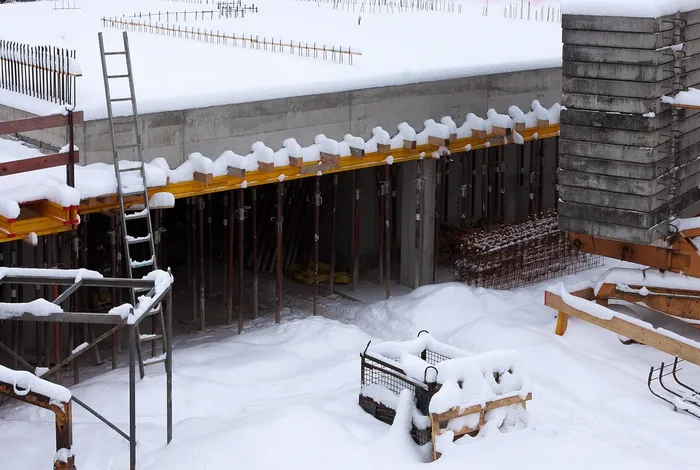
Pouring Concrete in Cold Weather: What Temperature, and How to Protect It
Concrete can be poured in winter; what matters is not the air but the temperature of the concrete and keeping it from freezing until it gains strength. TS 1248 sets the rules.
Read article ›
Choosing Stamped Concrete Patterns and Colours
Two things define how stamped concrete looks: the stamp pattern and the colour. The right choice depends on use, architecture and surrounding materials.
Read article ›
Penetrating Sealers: Protecting Concrete Without a Coating
Not every concrete floor needs a coating. Penetrating sealers soak into the concrete and protect it from dust, water and stains without changing its natural look.
Read article ›